TOOLS

Types of Levels Used in Building and Construction


Types of Levels Used in Building and Construction

Choosing the right spirit level can make measuring, fitting and construction work more accurate and easier to complete. Whether you are installing shelves, checking walls, setting out pipework, levelling floors or working on site, the right level tool helps you check that surfaces are straight, plumb or set to the correct angle.

There are several types of spirit levels available, from standard and box section levels to magnetic, torpedo, digital and screeding levels. Each type is designed for different tasks, working spaces and accuracy needs.

In this guide, we explain the main types of spirit levels, what each one is used for, and how to choose the right option for construction, DIY, fitting, flooring and general trade work.

Level, Plumb and Angle: What Does a Spirit Level Check?


Level means horizontal. This is used when checking shelves, worktops, floors, beams, frames and other surfaces that need to sit straight from side to side.

Plumb means vertical. This is useful when checking walls, posts, door frames, pipework and upright structures.

Angle refers to a slope or incline. Some spirit levels include angled vials or digital readings, making them useful for tasks such as setting gradients, checking roof pitch, installing handrails or working on drainage.

Understanding these three uses makes it easier to choose the right spirit level for the job, whether you need a long level for construction work, a magnetic level for metal surfaces or a compact torpedo level for tight spaces.

Types of Spirit Levels and When to Use Them

Different spirit levels are designed for different jobs. The best option depends on the length of the surface, the working space, the material you are checking and whether you need a simple vial reading or a more precise digital measurement.

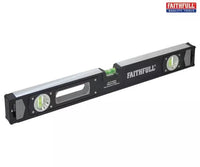
1. Heavy-Duty Spirit Levels

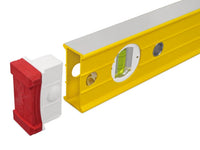
Heavy-duty spirit levels are a good choice for general construction, fitting and site work. They are useful for checking walls, frames, worktops, shelves, timber, doors and other surfaces that need to be level or plumb. A good example is the Faithfull Prestige Professional Heavy-Duty Spirit Level 60cm, which features 3 vials for checking horizontal and vertical alignment.
1. Heavy-Duty Spirit Levels

2. Magnetic Spirit Levels

2. Magnetic Spirit Levels
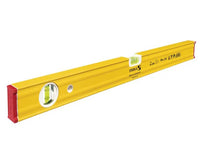
Magnetic spirit levels are useful when working with steel, pipework, metal frames, brackets or machinery. The magnets help the level hold itself in place, making hands-free alignment easier. One option to consider is the Stabila 80 ASM Magnetic Spirit Level 80cm, designed for accurate checks on metal surfaces.

3. Torpedo Levels

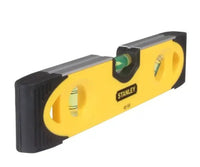
Torpedo levels are compact levels for tight spaces, pipework, cabinets, electrical work, plumbing and smaller installation jobs. They are especially useful when a full-size spirit level is too long. The Stanley Magnetic Shockproof Torpedo Level 230mm is a practical example, with horizontal, plumb and 45° vials, plus a magnetic base and V-groove edge for pipework.
3. Torpedo Levels

4. Pocket or Mini Levels

4. Pocket or Mini Levels
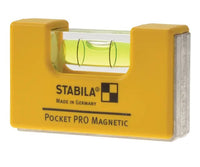
Pocket levels are small, lightweight levels for quick checks and everyday carry. They are useful for tradespeople who want a compact level in a tool bag, pocket or pouch. The Stabila Pocket Pro Level is a compact option with magnets and a V-groove base for quick alignment checks.

5. Digital Spirit Levels

Digital spirit levels are useful when you need more precise angle, slope or level readings. They are a strong option for fitting kitchens, setting gradients, installing handrails, aligning machinery or working to exact measurements. Options such as the Stabila TECH 196 DL Digital Spirit Level are useful for jobs where a digital reading gives better control than a standard vial.
5. Digital Spirit Levels

6. Screeding Levels

6. Screeding Levels
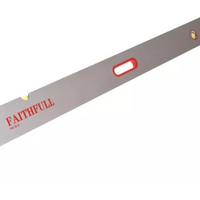
Screeding levels are longer levels used for levelling larger surfaces, especially flooring, concrete, patios, slabs and screeding work. The Faithfull Screeding Level 2.4m is suited to levelling flooring materials, laying patios and checking larger surface areas.

Which Spirit Level Is Best for Each Job?

The best spirit level depends on the surface, space and type of work. Use the table below as a quick guide.

Job or Task Best Spirit Level Type Example to Consider
General fitting, shelves, frames and worktops Heavy-duty spirit level Faithfull Prestige Professional Heavy-Duty Spirit Level 60cm
Steel, pipework, metal frames and machinery Magnetic spirit level Stabila 80 ASM Magnetic Spirit Level 80cm
Plumbing, electrical work and tight spaces Torpedo level Stanley Magnetic Shockproof Torpedo Level 230mm
Quick checks and everyday carry Pocket or mini level Stabila Pocket Pro Level
Precise angles, slopes and gradients Digital spirit level Stabila TECH 196 DL Digital Spirit Level
Floors, patios, concrete and screeding work Screeding level Faithfull Screeding Level 2.4m

Choosing Spirit Levels at MTN SHOP

Choosing the right spirit level comes down to the job, the working space and the type of measurement needed. A heavy-duty spirit level is a reliable choice for general fitting and construction work, while magnetic, torpedo, pocket, digital and screeding levels are better suited to more specific tasks.

For more options, browse our spirit levels and measuring tools collection to compare different sizes, styles and features.

Frequently Asked Questions


A standard spirit level is one of the most common types used for construction, fitting, DIY and general trade work. It is useful for checking whether surfaces are level, plumb or set to the correct angle.
A spirit level is the general name for a level tool with vials. A box section level is a stronger type of spirit level with a rectangular body, making it more suitable for regular site, trade and construction use.
A magnetic spirit level is best for metal surfaces such as steel frames, pipework, brackets, posts and machinery. The magnets help hold the level in place, making hands-free alignment easier.
A torpedo level is a compact level used for tight spaces, smaller fittings, pipework, plumbing, electrical work and cabinets. It is useful when a full-size spirit level is too long or difficult to position.
For flooring, patios, concrete and screeding work, a screeding level is usually the better choice. Its longer body helps check larger surfaces and makes it easier to identify high or low areas.

Contact Us

Have a question about our products? Get in touch and our team will get back to you.

Contact Us

Request a Quote

Need pricing for a larger order or a custom configuration? Request a tailored quote.

Request a Quote

Subscribe

Get product news and exclusive offers straight to your inbox.