

Disc Cutters
Disc cutters (also called cut-off saws or abrasive chop saws) are the heavy-duty portable cutting tools for slicing through steel, aluminium, wood, plastic, tile, brick, block and concrete on construction sites and in workshops. This is the collection for metal fabricators, structural steel workers, roofers, fencing contractors, groundworkers, drainage installers, first-fix construction crews and demolition contractors who cut heavy sections and mixed materials as part of daily site work.
You will find corded 230mm and 300mm disc cutters in both 110V site transformer specification (mandatory for UK construction sites) and 240V mains specification (for workshop, refurbishment and domestic install work), plus cordless 18V disc cutters for portable site cutting where mains power is not available. Key features across the range: multi-material blades from Evolution that cut steel, aluminium, wood, plastic and non-ferrous metals with a single blade (no more swapping between abrasive discs and TCT blades), 1600W to 2400W motor power for continuous cutting through heavy sections, kit versions that include carry cases and additional blades, and full safety features including guard, spark arrestor and vice clamp.
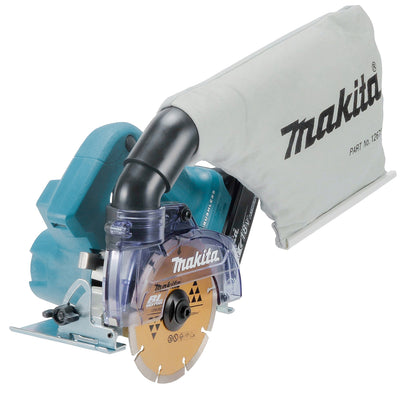
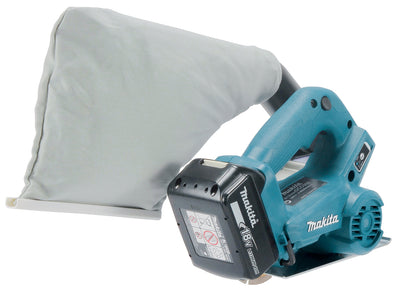
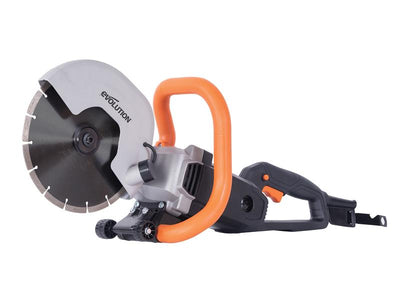
The brand here is Evolution Power Tools (the British Sheffield-based specialist that has effectively defined the modern multi-material disc cutter category with the R230DCT and R300DCT ranges), plus Makita for the DCC500Z LXT Brushless cordless 18V option.

6 products
Disc Cutters – Product list
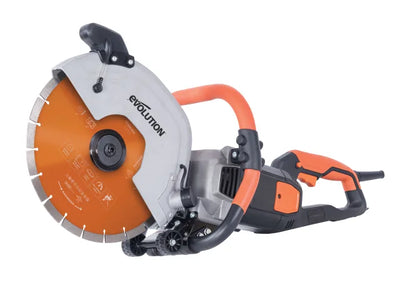
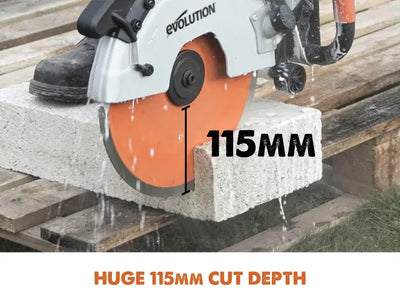
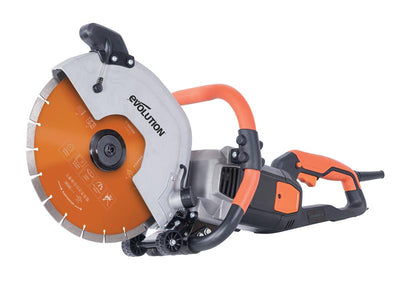
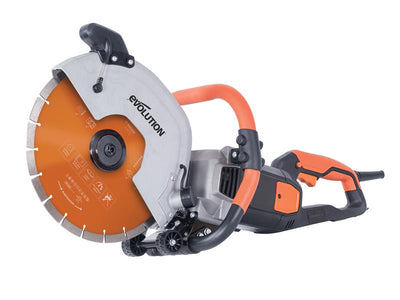
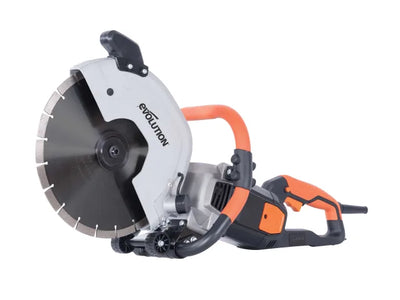
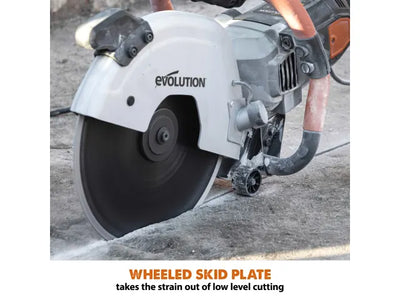
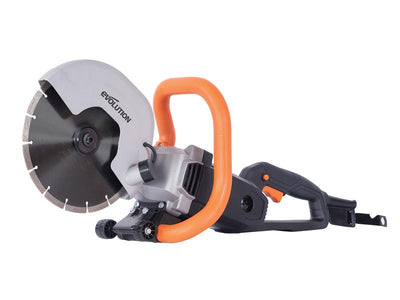
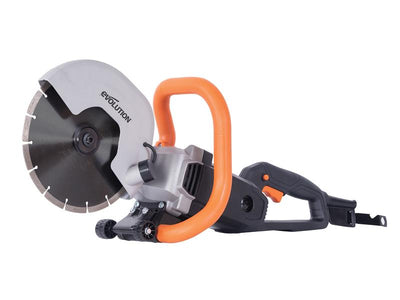

Disc cutters and cut-off saws at MTN Shop UK
A disc cutter is one of those tools where the technology has moved forward significantly in the last fifteen years and most trade users have not caught up. The traditional approach was: an abrasive cut-off saw with a disposable disc for cutting steel (fast but sparks everywhere, burns the material end, disc consumed within a few cuts), a diamond blade cut-off saw for cutting masonry and concrete (slow, expensive blade, wrong for metal), and a TCT wood saw for cutting timber (obviously not for metal). Three separate machines, three consumable blade types, constant blade changes as materials mix on site. Then Evolution Power Tools engineered a tungsten carbide-tipped multi-material blade that cuts steel, aluminium, wood, plastic and non-ferrous metals cleanly from a single blade - and the disc cutter category was fundamentally changed. The Disc Cutters collection at MTN Shop UK is built around the modern Evolution range plus the Makita cordless option.
Evolution R300DCT and R300DCT+ (300mm/12" flagship)
The Evolution R300DCT is the 300mm (12 inch) blade disc cutter and the flagship of the Evolution range - the machine most trade fabricators, steel workers and demolition contractors buy when they need serious cutting capacity in one portable tool:
- Evolution R300DCT+ 300mm Disc Cutter Kit 2400W 240V: the top workshop specification - 300mm multi-material blade, 2400W motor for continuous cutting through heavy sections, kit format includes carry case and additional blades for extended use. The R300DCT+ ("plus") version is the kit specification with additional accessories.
- Evolution R300DCT+ 300mm Disc Cutter Kit 1600W 110V: the same kit specification in mandatory 110V for UK construction sites - CDM 2015 and Electricity at Work Regulations require 110V CTE (centre-tapped earth) transformers on commercial sites.
- Evolution R300DCT 300mm Disc Cutter + Blade 2400W 240V: the standard tool + blade format (not kit) for workshop use - 240V specification for mains-powered continuous cutting.
- Evolution R300DCT 300mm Disc Cutter + Blade 1600W 110V: the standard tool + blade format in 110V for site use.
Typical cutting capacity on the 300mm blade: up to around 110mm depth through mild steel section, up to full timber depth for equivalent thickness, similar depths on aluminium and non-ferrous.
Evolution R230DCT (230mm/9" compact)
The Evolution R230DCT is the compact 230mm (9 inch) blade version - lighter, more portable, and adequate for most site cutting where the full 300mm capacity of the R300DCT is not needed:
- Evolution R230DCT 230mm Disc Cutter + Blade 2000W 240V: the standard workshop specification - 2000W motor, 230mm multi-material blade included, 240V mains-powered.
- Evolution R230DCT 230mm Disc Cutter 2000W 240V: the same 240V version without blade included (for existing users adding a second tool to the workshop who already have spare blades).
- Evolution R230DCT 230mm Disc Cutter + Blade 1600W 110V: the 110V site version with blade included - the standard specification for UK commercial construction site use.
Typical cutting capacity on the 230mm blade: up to around 80mm depth through mild steel section, adequate for most site cutting work including rebar, angle iron, steel section, aluminium extrusion, timber and non-ferrous.
Cordless disc cutters
Cordless disc cutters are increasingly capable but still typically limited to smaller blade diameters for battery power reasons:
- Makita DCC500Z LXT Brushless Disc Cutter 18V (bare unit): the Makita 18V LXT platform cordless disc cutter with brushless motor and 125mm blade capacity. Right for portable site cutting where mains or site transformer power is not available.
- Evolution R260DCT-Li Cordless Disc Cutter: the Evolution cordless option with 260mm blade capacity - larger than the Makita for site work where a bigger cut is needed without cable.
For most trade cutting work on sites and in workshops, corded 110V or 240V remains the standard specification for sustained cutting power and the ability to run through continuous production without battery management. Cordless is the right choice for occasional site cutting away from power access.
What makes Evolution multi-material blades different
Traditional cutting disc technology was material-specific: abrasive discs for metal (fast cutting but very high sparking, blade consumed within a few cuts, heats and blues the cut end, fine metal dust generated), diamond blades for masonry and concrete (slow cutting through metal, expensive, purpose-specific), and TCT blades for wood (obviously not for metal, tooth damage on any embedded metal). Evolution's proprietary tungsten carbide-tipped multi-material blade cuts through:
- Mild steel and structural steel section: clean cut with minimal sparking, cool cut edge (no blueing or temper damage), typical blade life 100+ cuts through 6mm mild steel plate.
- Aluminium and non-ferrous metals: clean cut without smearing or tearing the softer material.
- Timber (softwood, hardwood, sheet goods): full cutting depth to blade capacity, clean finish, works even through timber with embedded nails without tooth damage.
- Plastic (PVC pipe, plastic sheeting, ABS): clean cut without melting from friction heat.
The trade impact: one disc cutter with one blade covers cutting jobs that previously required three separate tools with three consumable blade types. For fabrication shops, steel workers, structural steel installers, roofers cutting mixed profile sheet, and demolition contractors dealing with mixed-material site cuts, this is a significant change in workflow economics.
110V vs 240V: which one for your work
- 110V (yellow site transformer): mandatory for UK commercial construction sites under CDM 2015 and the Electricity at Work Regulations 1989. Commercial sites require 110V centre-tapped earth (CTE) transformers to limit electric shock risk on temporary electrical installations. If the tool is going on a commercial construction site, it must be the 110V version. The Evolution R300DCT+ 110V Kit and R230DCT 110V versions are the site specification.
- 240V single-phase mains: the standard for workshop, refurbishment work, domestic install and any environment where the tool stays in one location with normal mains power. The 240V versions typically have more motor power available (2400W R300DCT+, 2000W R230DCT) versus the 110V equivalents (1600W across the range) because 240V supply can deliver sustained higher current.
Common applications
- Metal fabrication: cutting mild steel section, angle iron, RSJ, box section, structural steel for on-site fabrication and modifications.
- Structural steel installation: trimming and adjusting structural steelwork on site during erection.
- Roofing: cutting metal profile sheet, guttering, downpipes, flashing and roofing accessories.
- Fencing: cutting steel fence posts, chain link mesh panels, security fencing, agricultural steel work.
- Groundworks and drainage: cutting cast iron drainage pipes, rebar for structural concrete, ground beam reinforcement.
- First-fix construction: cutting metal studwork, structural framing steel, cable tray, unistrut suspension.
- Demolition and strip-out: cutting embedded metal, mixed material demolition, structural cutting during controlled dismantlement.
- Mixed material workshops: workshops that cut a range of materials daily benefit most from the multi-material blade approach.
Disc cutter vs angle grinder vs mitre saw vs chop saw
- Disc cutter (this collection): 230mm-300mm blade portable cut-off saw, mounts workpiece in built-in vice, cuts heavy sections in one pass, right for structural steel, rebar, cast iron pipe, mixed materials at trade capacity.
- Angle grinder: 100mm-230mm handheld tool, more versatile for detail cutting and grinding, but slower and less accurate for structural cuts than a dedicated disc cutter. See our angle grinders range.
- Metal chop saw (abrasive): traditional 355mm abrasive disc cut-off saw, fast for metal cutting but material-specific and produces high sparking. Being replaced by multi-material disc cutters like the Evolution range.
- Mitre saw: for angled cuts in timber and lightweight materials at precision angles, not for structural metal cutting. See our mitre saws range.
- Bandsaw: the workshop alternative for continuous fine-cut work in metal - slower per cut but more accurate for machined parts. See our bandsaws range.
Safety and standards
- PUWER 1998: tools must be maintained, inspected and used only by trained operators. Disc cutter training covers safe blade changes, workpiece clamping, guard use and correct cutting technique.
- CDM 2015: applies on construction sites including 110V power specification for corded tools.
- Abrasive Wheels Regulations: HSE guidance on abrasive wheels applies to abrasive discs used in cut-off saws - training, inspection and safe storage requirements.
- Guard in place: the transparent blade guard must always be fitted - do not remove for convenience. Sparks, blade fragments and material offcuts fly at high speed from the cut zone.
- Workpiece clamped in vice: the built-in vice must clamp the workpiece securely before cutting. Loose workpieces can catch the blade and cause serious injury or blade shattering.
- Spark direction: orient the tool so sparks fly away from the operator and any flammable materials or dust.
- PPE: safety goggles (not just glasses - the impact rating matters), safety gloves for handling hot cut ends, safety boots for protection from dropped material, hearing protection for sustained cutting, and respiratory protection for masonry cutting where crystalline silica dust is generated (HSE Workplace Exposure Limit substance).
- HAVS (Hand-Arm Vibration Syndrome): monitored under the Control of Vibration at Work Regulations 2005 for extended use.
- PAT testing: corded electric tools should be PAT tested per the Electricity at Work Regulations 1989 for commercial use.
Choosing the right disc cutter
- UK commercial construction site cutting: Evolution R300DCT+ 110V Kit or R230DCT 110V (mandatory 110V for sites).
- Workshop with 240V mains - heavy production cutting: Evolution R300DCT+ 2400W 240V Kit (top spec for continuous heavy work).
- Workshop with 240V mains - general cutting: Evolution R230DCT 2000W 240V (adequate for most work, more portable).
- Portable cordless site cutting away from power: Makita DCC500Z LXT 18V (existing Makita platform) or Evolution R260DCT-Li Cordless.
- Existing Evolution multi-material blade user: single-tool + blade format rather than kit format.
- New to disc cutters: R300DCT+ Kit versions include everything needed (tool, case, blade, sometimes spare blade) for immediate work.
Related categories
The Disc Cutters collection sits under our wider power tools category, alongside our other powered saws range including chop and cut-off saws, mitre saws, circular and trim saws, bandsaws, reciprocating saws and table saws. For angle grinders (the smaller handheld cutting/grinding tool), see our angle grinders collection. For metalworking tools generally, see our metalworking tools powered range. For the blades themselves and cutting consumables, see our circular saw blades and wider Bits, Blades & Accessories range. For batteries and chargers to keep cordless disc cutters running, browse our batteries range. For essential PPE for cutting work, see our safety eyewear, safety gloves, safety boots, respiratory protection and dust masks ranges.
For trade orders, fabrication workshop kits, site cutting contract supply or specific Evolution R230DCT/R300DCT or Makita LXT references, request a quote and our team will get back to you with availability.