Belt Sanders
We sell belt sanders from Makita, DeWalt, Einhell, Black+Decker and Olympia Power Tools, covering handheld corded and 18V cordless models plus a stationary belt-disc sander for bench use. Belt widths in this range run from 30mm files up to 100mm heavy-duty belts.
A belt sander uses a continuous loop of abrasive belt driven around two drums to strip material fast, making it the tool of choice for levelling floors, stripping paint or varnish, and shaping timber quickly before finer sanding. Match belt width and motor power to the job: wider belts and higher wattage suit heavy stock removal, while narrower belts and variable speed models give more control on detail and finishing work.

13 products
Belt Sanders – Product list


Choosing a belt width
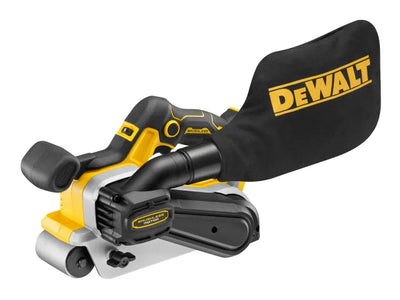
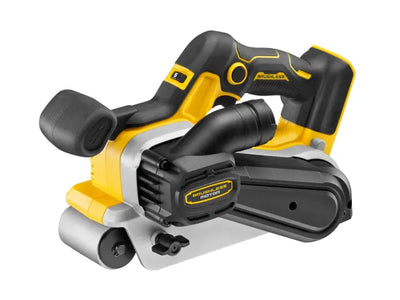
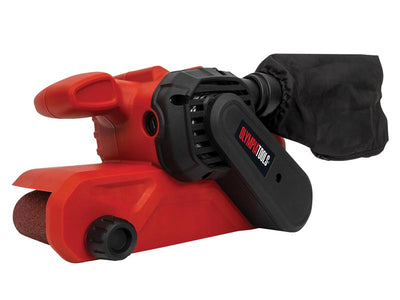
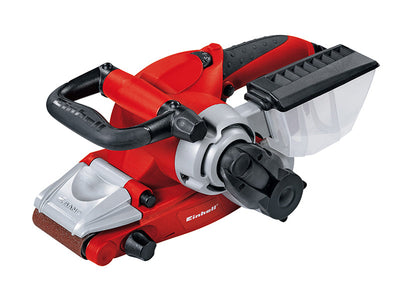
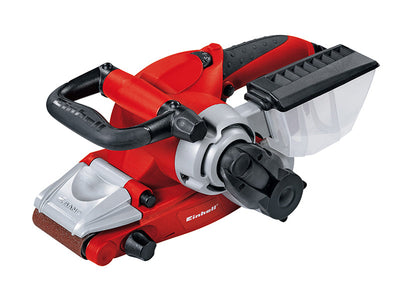
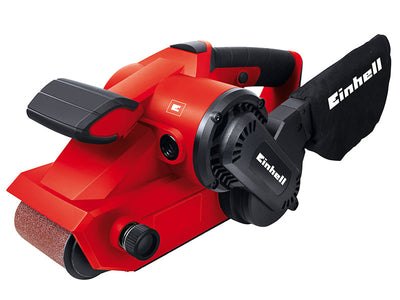
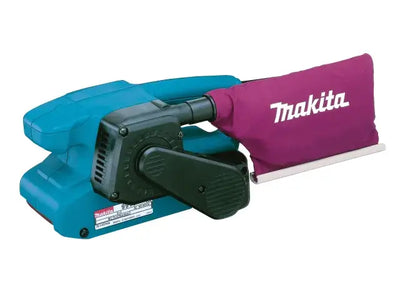
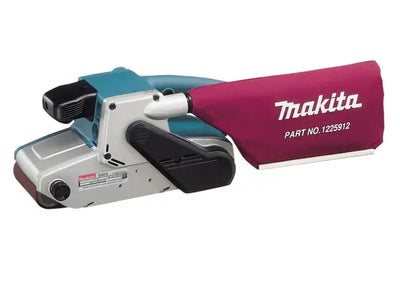
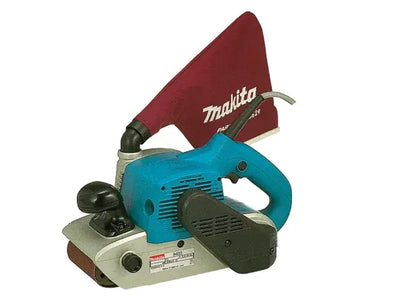
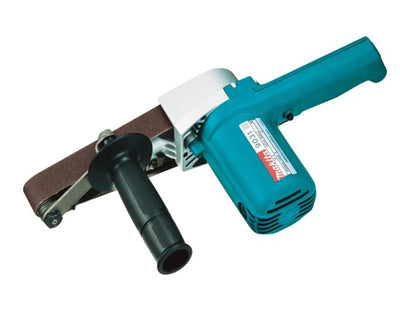
Belt width determines how much material you remove per pass and what the sander can reach into. The Makita 9031 uses a narrow 30mm belt suited to detail work and awkward angles, while the Makita 9403 runs a full 100mm belt for fast, heavy stock removal across large flat surfaces. Mid-range widths around 75-76mm, found on the Black+Decker KA86, Einhell TE-BS 8540 E and Olympia Power Tools model, balance material removal speed with manoeuvrability for general joinery and site work.
Corded vs cordless belt sanders
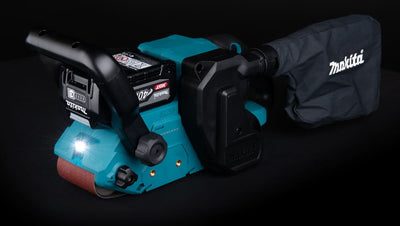
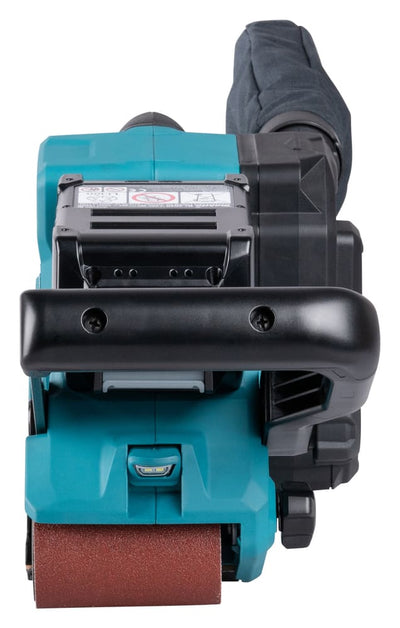
Corded models give continuous power for extended sanding sessions, with wattage ranging from 550W on the compact Makita 9031 up to 1200W on the Makita 9403 for demanding stock removal. Cordless 18V options, including the Makita DBS180Z and DeWalt DCW220NT, trade some runtime for freedom of movement, useful on site or anywhere a trailing cable gets in the way. Most cordless models here are sold as bare units, so check you have a compatible battery and charger before ordering.
Variable speed for finishing control
A fixed-speed sander runs at one belt speed regardless of material, which suits fast, uniform stock removal but offers little control on delicate work. Variable speed models, such as the Makita 9404 and Einhell TE-BS 8540 E, let you slow the belt down for softer woods, veneers or finishing passes where an aggressive fixed speed would risk gouging the surface.
Belt files and stationary sanders
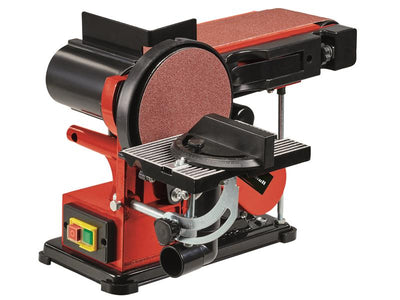
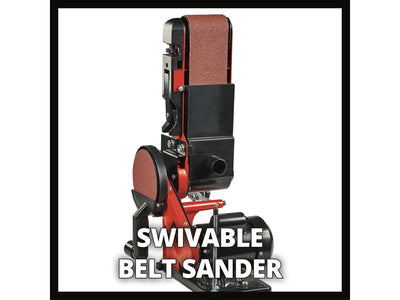
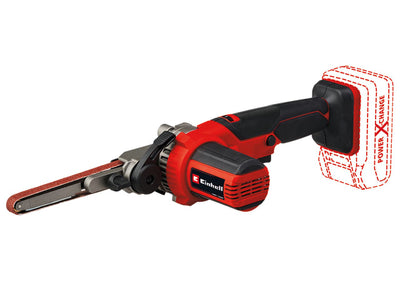
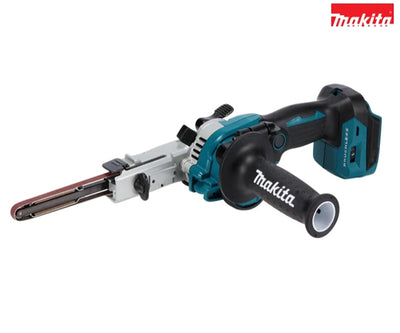
For tighter, more detailed work than a standard belt sander allows, the Einhell TE-BF 18 Li-solo belt file uses a narrow continuous belt for shaping and deburring in confined areas. For bench-based work, the Einhell TC-US 380 stationary belt-disc sander combines a belt and disc sanding station fixed to a workbench, suited to repeated shaping and finishing tasks in a workshop setting.
Standards and compliance
Belt sanders sold here comply with IEC 62841, the international safety standard for hand-held and stationary power tools, and carry CE and UKCA marking confirming they meet the relevant EU and UK safety requirements. Corded 240V models are for standard mains use; check the voltage stated on each product page, as some are also available in 110V for site use under a transformer.
Complete your sanding kit
For finer finishing work after belt sanding, see our sanders and polishers range. Cordless belt sander owners can find compatible batteries and chargers in our batteries and chargers for cordless tools collection.
Why buy your belt sander from MTN Shop
All belt sanders sold here are genuine stock from Makita, DeWalt, Einhell, Black+Decker and Olympia Power Tools. We ship fast across the UK with straightforward returns on unused stock. For trade or bulk orders, request a quote and our team will confirm stock and lead time directly.