

Chop & Cut Off Saws
Take on heavy-duty metal cutting with our range of chop saws and cut-off saws from DEWALT, Evolution, Bosch, Makita and HiKOKI. From cordless cut-off saws like the DEWALT DCS691X2 XR FlexVolt, to high-capacity metal cutting mitre chop saws such as the Evolution S355MCS, through to abrasive cut-off saws like the Makita LW1400, this range covers everything from site work to workshop production cutting.
A chop saw uses a fixed downward cutting action to give a clean, consistent cut through steel, box section and other metal stock, making it the standard tool for repetitive metal cutting where accuracy and speed matter more than portability.

19 products
Chop & Cut Off Saws – Product list


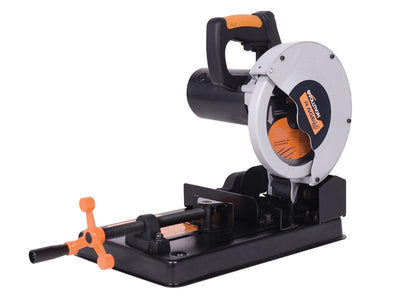


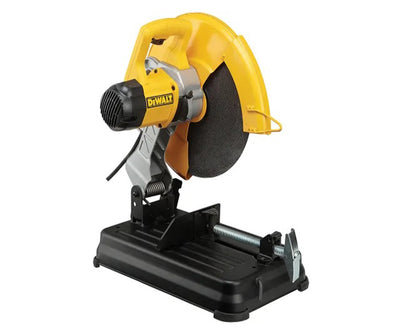
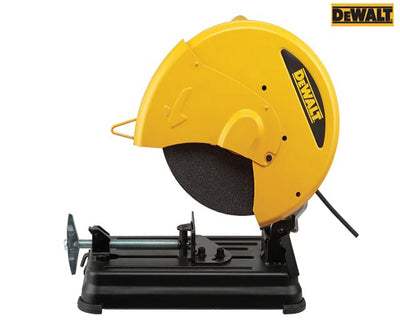
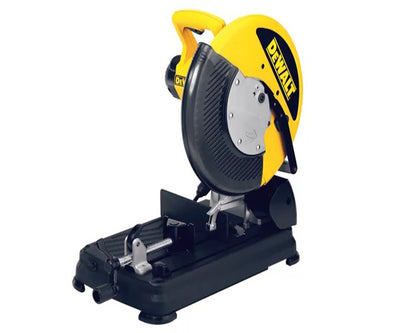
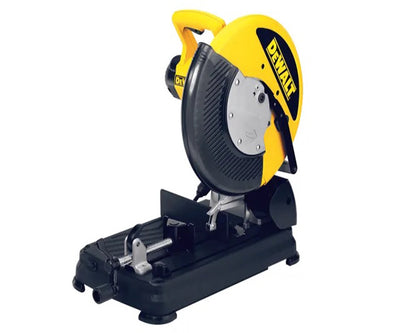


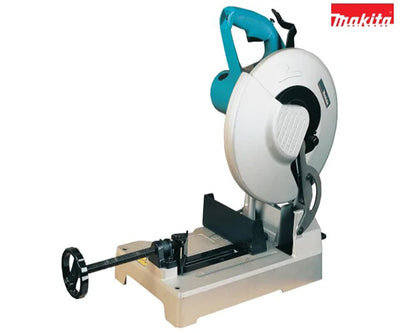
TCT chop saws for clean, cool cuts
TCT (tungsten carbide tipped) chop saws use a toothed blade rather than an abrasive disc, giving a cooler, cleaner cut with less sparking and no need to replace consumable discs as often. The Evolution S355MCS and S355CPS both use 355mm TCT blades for industrial-grade metal cutting, with the S355MCS adding mitre capability for angled cuts that a fixed chop saw can't manage. The compact Evolution RAGE-4 brings the same TCT cutting to a smaller, more portable 185mm format, and the R355CPS extends cutting capability across multiple materials, not just metal, with the right blade fitted.
Abrasive cut-off saws for high-volume cutting
Abrasive cut-off saws use a bonded abrasive disc instead of a toothed blade, generally cheaper to run initially but requiring more frequent disc changes than a TCT chop saw. The DEWALT D28730, DW872 Metalica, HiKOKI CC14SF and Makita LW1400 all use 355mm abrasive discs for fast, high-power cutting through steel and other metal stock. The Makita LW1401S offers a similar abrasive setup for repeated production work.
Cordless chop saws for site work
For site work without a mains connection nearby, cordless chop saws remove the cable entirely. The DEWALT DCS691X2 XR FlexVolt runs a 230mm blade on 54V power, and the Makita DLW140Z runs on 36V from two 18V batteries, both giving mains-equivalent cutting power without a trailing lead. For lighter, more compact cutting tasks, the DEWALT DCS438E2T gives a smaller cut-off tool for detail and finishing cuts rather than heavy stock removal.
Precision metal cutting
The Bosch GCD 12 JL and Makita LC1230N use TCT blades at 305mm for accurate, repeatable cuts on smaller metal stock, suited to fabrication and workshop tasks where cut precision matters as much as speed.
Choosing between chop saw and cut-off saw
"Chop saw" and "cut-off saw" are often used interchangeably, but the key distinction to look for is blade type and cutting method: fixed TCT chop saws give clean, repeatable cuts with lower running cost over time, abrasive cut-off saws cut fast across a wide range of materials with cheaper upfront tool cost, and mitre-capable models add angled cutting that a straight chop saw can't do.
Standards and compliance
Chop and cut-off saws sold here comply with IEC 62841, the international safety standard for power tools, and carry CE and UKCA marking confirming they meet the relevant EU and UK safety requirements. Always match the blade or disc rating to the saw's maximum RPM and never exceed the manufacturer's stated cutting capacity.
Why buy your chop saw from MTN Shop
All chop and cut-off saws sold here are genuine stock from DEWALT, Evolution, Bosch, Makita and HiKOKI. We ship fast across the UK with straightforward returns on unused stock. For trade or bulk orders, request a quote and our team will confirm stock and lead time directly.