

Chisels
Browse our range of chisels for woodworking and masonry. Choose from bevel edge wood chisels, heavy-duty chisels and complete chisel sets such as the Hultafors HDCS4 heavy-duty chisel set and the Bahco 434 bevel edge chisel set, alongside cold chisels, brick bolsters and scutch chisels from Roughneck, Faithfull and Footprint. For more joinery tools, visit our woodworking tools range.

261 products
Chisels – Product list





















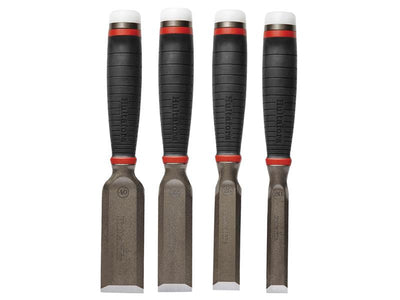
How to choose the right chisel
The right chisel depends on two things: the material you are cutting and how you will drive the blade. Wood chisels are made for timber and are pushed by hand or tapped with a mallet. Masonry chisels, such as cold chisels and bolsters, are made to be struck hard with a lump hammer. Never use a wood chisel on brick, stone or metal, because it will chip the edge and can damage the handle.
Which chisel for which job
| Job | Chisel to use |
|---|---|
| Cutting hinge recesses and lock housings | A 19mm or 25mm bevel edge chisel |
| Cutting and cleaning out dovetails and fine joints | A narrow bevel edge chisel, 4mm to 12mm |
| Paring wide surfaces and trimming tenons | A wide chisel, 32mm or 38mm |
| Work in tight spaces | A butt chisel with a shorter blade |
| Cutting bricks and blocks to size | A brick bolster |
| Cutting and shaping stone or concrete, or cutting through bolts | A cold chisel |
| Trimming and dressing brick or block faces | A scutch holder with replaceable combs |
| Raking out mortar before repointing | A plugging chisel |
| Carving and shaping curves in wood | A gouge |
Wood chisels: bevel edge, heavy-duty and butt chisels
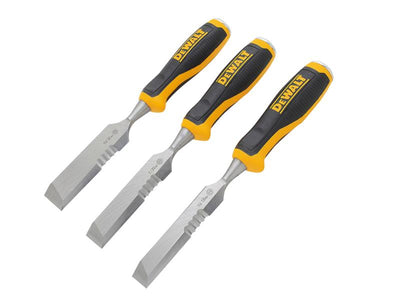
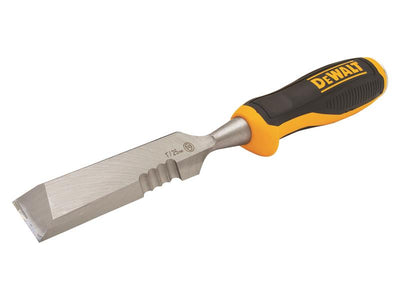
A bevel edge chisel has sides ground at an angle, so the blade can reach into corners and joints where a square-sided chisel would catch. That makes it the best first chisel for most people. Good examples are the Bahco 424-P bevel edge chisel and the IRWIN Marples M444 Blue Chip.
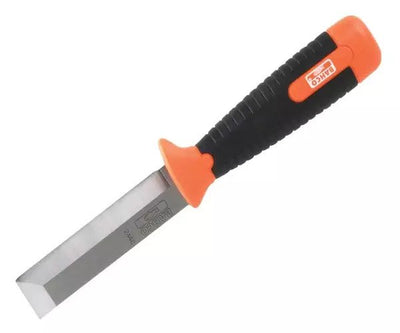
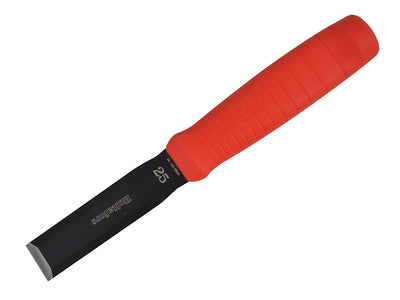
If you do a lot of heavy chopping, choose a chisel built for heavier work, such as the Hultafors HDC heavy-duty chisels. They are available in single widths from 6mm to 38mm, so you can add sizes as you need them. A butt chisel has a shorter blade that gives more control in confined spaces, for example the Hultafors Scandinavian butt chisel.
Handles: mallet or hammer?
How you drive the chisel should decide the handle you choose:
- Strike cap handles have a steel cap that can be struck with a steel hammer. This suits site work and first fix carpentry, for example the Stanley Dynagrip strike cap range.
- Splitproof and impact-resistant handles are made to withstand regular striking, like the IRWIN Marples M750 Splitproof.
- Traditional handles should be driven by hand or with a wooden or rubber mallet, because a steel hammer can split them over time.
Should you buy a chisel set or single chisels?
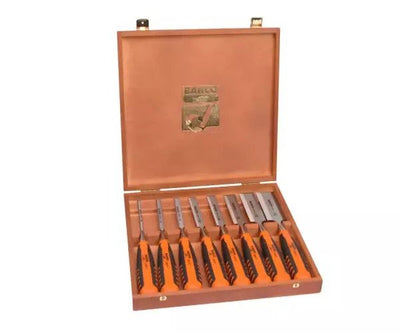
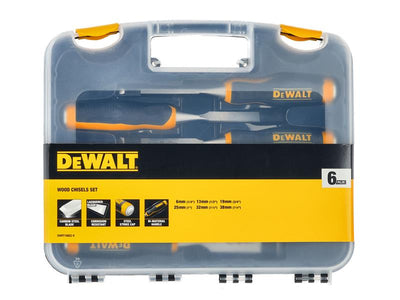
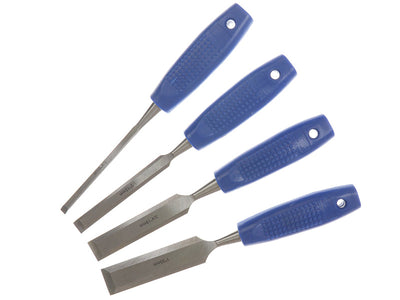
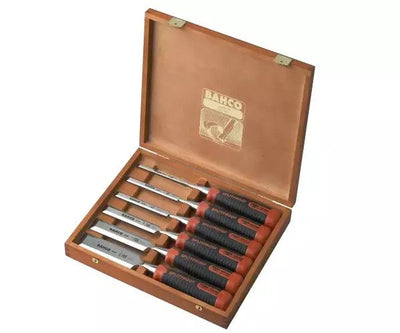
A set is the most economical way to start, because it covers the widths you will use most. Four or five chisels between 6mm and 25mm handle most joinery jobs, as in the Hultafors HDCS4 set or the IRWIN Marples MS500 5-piece set. For fine furniture work, a larger set such as the Bahco 424-P 8-piece set gives you narrow widths for small joints. If you already own a set, buy single chisels to fill the gaps, typically a 32mm or 38mm for paring.
Masonry chisels: cold chisels, bolsters and scutch chisels
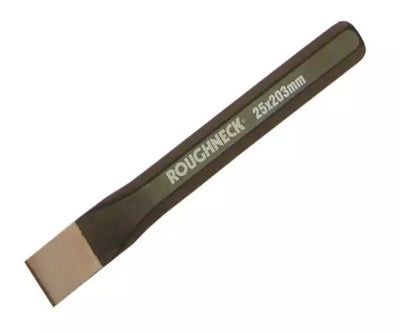
To cut a brick with a brick bolster, score a line on every face with light blows, then strike firmly on the line to split it. A bolster with a hand guard protects your hand if the hammer misses. For blocks, use a wider blade such as the Roughneck Gorilla Block Buster bolster.
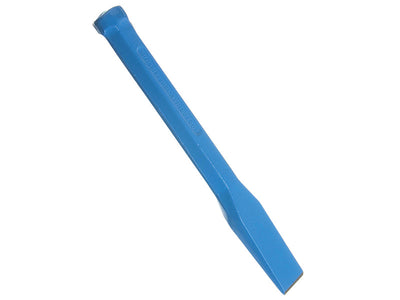
A cold chisel is used for cutting and shaping stone and concrete and for cutting through rusted bolts. Choose a longer cold chisel to keep your hand further from the strike point. For trimming brickwork, a scutch comb holder takes replaceable combs, so you change the comb instead of the whole tool. If you are starting out, the Roughneck chisel and bolster set covers the basics. You will need a lump hammer from our hammers range.
Using chisels safely
- Clamp your work so both hands are free, and always keep your hands behind the cutting edge.
- Cut away from your body.
- Wear eye protection when using masonry chisels, because chips of brick and stone can fly off.
- A cold chisel or bolster with a mushroomed head should be ground back or replaced, because loose fragments can break off when the head is struck.
- Keep blades sharp. A blunt chisel needs more force and is more likely to slip.
Keeping your chisels sharp
Most wood chisels need honing before first use and regularly after that. Flatten the back of the blade on a sharpening stone, then hone the bevel at a consistent angle using a honing guide. Many woodworkers grind a primary bevel of around 25 degrees and hone a small secondary bevel slightly steeper. The Stanley Dynagrip set comes with sharpening accessories, and you will find chisel sharpeners in this collection.
Explore more tools in our woodworking tools and hand tools ranges.