

Rebar Tools
Rebar tools covers the cordless power tools that have transformed steel reinforcement work on UK construction sites: rebar tying tools that automate the traditional wire-and-pincers method of tying reinforcement bars, and rebar bender/cutter combi tools that cut and bend reinforcement to length and shape on site. This is the collection for steel fixers, ferralla contractors, RC (reinforced concrete) contractors, groundworkers, precast manufacturers, formwork specialists and civil engineering crews working on foundations, slabs, walls, bridges and any other reinforced concrete structure.
You will find cordless rebar tying tools that tie reinforcement in around one second per tie (compared with 4 to 5 seconds by hand), automated wire feed from replaceable spools, and ergonomic pistol-grip designs that eliminate the wrist and forearm strain of manual tying. You will also find cordless rebar bender/cutter combi tools that cut rebar cleanly and bend it to angles from 0° to 180° in a single portable tool, sized for the diameters most commonly used in UK site work.
The brands here are the two trade references in cordless rebar tooling: Makita (with the DTR181ZJ and DTR180ZK on the 18V LXT platform - the industry standard rebar tying tools used by UK steel fixers) and HiKOKI (with the VB3616DA/JGZ Multi Volt 36V rebar bender/cutter, the trade reference combi for site cutting and bending work).

2 products
Rebar Tools – Product list
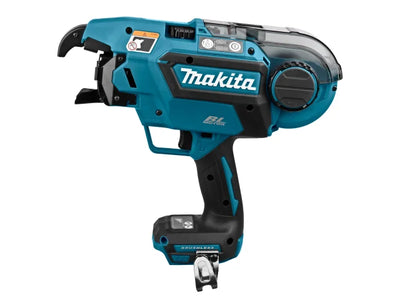
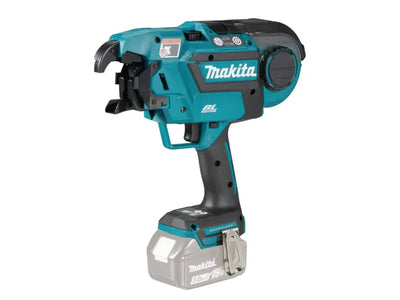
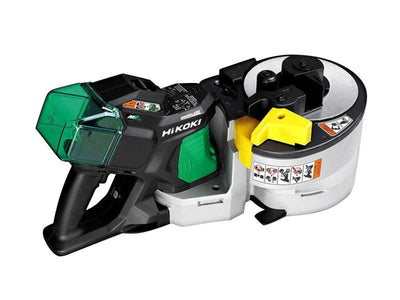
Rebar tying, bending and cutting tools at MTN Shop UK
Steel fixing is one of the most physically demanding trades in construction. A crew tying reinforcement for a large slab or foundation can make tens of thousands of individual ties in a working day, each one performed by twisting wire around the crossing point of two rebar sticks with pincers and a wrist action. Over years of continuous work, this method causes some of the highest rates of musculoskeletal disorders (MSDs) in UK construction: carpal tunnel syndrome, tendonitis, forearm strain and back problems from stooped working. Cordless rebar tying tools remove around 90% of the physical stress from the job while tying rebar four to five times faster than manual work, and cordless bender/cutter combi tools eliminate the traditional bench-bender-and-hacksaw method for site cutting and bending work. The Rebar Tools collection at MTN Shop UK is built around the two trade reference brands in this segment.
Cordless rebar tying tools
A cordless rebar tying tool wraps a length of tying wire around the crossing point of two rebar sticks, twists the wire to create a secure tie, and cuts the wire cleanly - all in around one second per tie. The wire is supplied from a replaceable spool in the tool magazine (typically 50 metres per spool, several hundred ties per spool depending on rebar diameter). Compared with manual tying:
- Speed: around 1 second per tie versus 4 to 5 seconds by hand. On a large slab job, this is the difference between finishing on Friday and running into the following week.
- Ergonomics: the pistol grip and trigger action eliminate the wrist rotation and grip force that cause MSDs in manual tying. Steel fixers using cordless tools report significantly less end-of-day fatigue and dramatically reduced RSI symptoms over the long term.
- Tie consistency: every tie is the same tension and geometry, giving a more uniform tie quality across the reinforcement mat.
- Overhead work: the tool can tie overhead without the awkward twisting movements that make manual overhead tying particularly hard on the shoulders and elbows.
Makita DTR181ZJ LXT Rebar Tying Tool 18V
The Makita DTR181ZJ is the newer generation Makita rebar tying tool with brushless motor, faster tying cycle, longer battery life per charge, and refined ergonomics for reduced operator fatigue. Bare unit for existing Makita 18V LXT users. The J suffix indicates the machine ships in a MakPac carry case for site storage. This is the current professional specification for steel fixing crews.
Makita DTR180ZK LXT Rebar Tying Tool 18V
The Makita DTR180ZK is the earlier-generation Makita rebar tying tool, still in current production and specification. Brushed motor rather than brushless, but with the same rebar capacity and tying quality. Bare unit for existing Makita 18V LXT users, with the K suffix indicating kit/carry case supplied. The DTR180ZK is the more cost-effective option where the additional brushless generation features of the DTR181ZJ are not needed for the volume of work.
Cordless rebar bender/cutter tools
Rebar bender/cutter combi tools handle the two other essential steel fixing operations that were traditionally done with hand-cranked bench benders and hacksaws: cutting rebar to length and bending rebar to shape. The cordless combi does both in one portable tool that can be brought to the workpiece rather than requiring the workpiece to be brought to a bench.
HiKOKI VB3616DA/JGZ Multi Volt Rebar Bender/Cutter 36V
The HiKOKI VB3616DA is the trade reference for cordless rebar bender/cutter work on the HiKOKI 36V Multi Volt platform:
- Rebar cutting: clean square cuts through rebar up to the tool's rated capacity (typically D16mm mild steel).
- Rebar bending: adjustable bending angle from 0° to 180° for standard shapes (starter bars, links, hooks, stirrups, cranked bars per BS 8666 bending schedules).
- Multi Volt 36V platform: HiKOKI's higher-voltage platform for demanding cordless applications where 18V would struggle. The Multi Volt battery is also backwards-compatible with HiKOKI 18V tools using the switch function.
- Kit supplied: the /JGZ variant includes 2 x 5.0Ah Multi Volt batteries and charger, so the tool is ready to work out of the box.
- Site portability: the combined cut-and-bend function in one tool replaces two traditional workshop machines (bench cutter plus bench bender) and works on site next to the reinforcement rather than at a fixed workshop location.
Rebar sizes and typical UK applications
UK rebar is specified in diameter (mm) and to BS 4449 for grade and BS 8666 for cutting and bending schedules. Common sizes and applications:
- D8: lightest reinforcement, links and stirrups, decorative concrete, precast garden furniture.
- D10: domestic foundations, garage slabs, small retaining walls, links and secondary reinforcement.
- D12: the most common domestic and light commercial rebar size - house foundations, slabs, ground beams, general RC work.
- D16: commercial slabs, larger foundations, primary reinforcement in RC frame construction, retaining walls.
- D20: large commercial foundations, heavy slabs, structural columns, precast panels.
- D25 and D32: civil engineering, bridge decks, heavy structural columns, industrial slabs, tunnel linings.
Cordless rebar tying tools handle combinations up to typically 40mm total diameter (e.g., D20 x D20 or D25 x D16). Cordless rebar bender/cutters handle single-bar diameters up to D16mm in mild steel typically. For heavier diameters (D20 and above), bench-mounted hydraulic benders and shears remain the specification.
Consumables: tying wire
Cordless rebar tying tools use manufacturer-specific tying wire supplied on spools that fit the tool magazine. Makita rebar tying tools use Makita TW902-type wire spools; HiKOKI and competitor brands use their own equivalent specifications. Wire spools are consumables and represent the ongoing running cost of the tool. Typical spool capacity is around 50 metres of wire, giving several hundred to over a thousand ties per spool depending on rebar diameter and tie geometry. Keep spare spools in the toolbox, particularly on large jobs where running out mid-day means a trip back to the van or merchant.
Sectors and applications
- Steel fixing contractors (ferralla): daily driver on all RC work, from house foundations up to major civil engineering.
- Groundworkers: foundation reinforcement, ground beams, capping beams, drainage manholes and inspection chambers.
- RC frame contractors: columns, beams, walls, slabs and stairs in reinforced concrete frame buildings.
- Slab specialists: industrial floors, warehouse slabs, car park decks, agricultural slabs.
- Civil engineering: bridges, tunnels, retaining walls, sea defences, transport infrastructure.
- Precast concrete manufacturers: factory production of precast panels, lintels, beams, floor units.
- Formwork specialists: reinforcement tying inside formwork before pour.
- House builders: traditional strip and raft foundations, ground bearing slabs, basement retaining walls.
Ergonomics and MSD prevention
The Health and Safety Executive (HSE) identifies steel fixing as one of the highest-risk trades for musculoskeletal disorders in UK construction. Manual rebar tying with pincers involves repetitive wrist rotation, sustained grip force, awkward working postures (often stooped or overhead), and thousands of repetitions per day. The cumulative effect over years of trade work commonly leads to carpal tunnel syndrome, tendonitis, forearm and elbow strain, and lower back problems. Employers have a duty under the Management of Health and Safety at Work Regulations 1999 to assess and control MSD risks, and providing cordless rebar tying tools is one of the primary practical control measures for steel fixing crews. For contractors employing steel fixers, the tool cost is small compared with the productivity gain and the reduction in insurance claims, sickness absence and staff turnover from MSD-related conditions.
Safety and standards
- PUWER 1998: tools must be maintained and inspected, and used only by trained operators. Training on cordless rebar tools is brief but essential - operators must understand jam clearance, wire feed loading, and safe carry positions.
- CDM 2015: applies on construction sites, including PPE requirements and site safety planning.
- PPE: safety gloves for handling rebar (sharp edges, wire ends, potential rebar cap requirements per HSE guidance), safety boots for foot protection from dropped rebar, safety helmets for site head protection, safety glasses for eye protection particularly during cutting and bending operations.
- Rebar caps: HSE guidance requires exposed rebar ends to be capped or protected to prevent impalement injuries during site work.
- Manual handling: heavier rebar sticks require two-person lift or mechanical assistance per the Manual Handling Operations Regulations 1992.
- Battery care: the rebar tying and bending mechanisms draw significant current. Keep spare batteries charged and rotate through the tool on high-volume days.
- PAT testing: battery chargers should be PAT tested per the Electricity at Work Regulations 1989 for commercial use.
Choosing the right rebar tool
- Steel fixing crew doing continuous tying work: Makita DTR181ZJ LXT (brushless, latest generation, best speed and battery life).
- Occasional tying work or budget-conscious purchase: Makita DTR180ZK LXT (earlier generation, more cost-effective, same tying quality).
- Existing Makita 18V LXT user: either the DTR181ZJ or DTR180ZK bare unit will use your existing Makita 18V batteries.
- Site cutting and bending of rebar to length and shape: HiKOKI VB3616DA/JGZ Multi Volt (kit with batteries and charger, ready to work).
- Existing HiKOKI Multi Volt user: the VB3616DA is compatible with your existing HiKOKI 36V Multi Volt batteries.
- Full RC contractor kit: combination of a Makita rebar tying tool for daily tying plus the HiKOKI bender/cutter for site cutting and bending covers the full range of steel fixing operations.
Related categories
The Rebar Tools collection sits under our wider power tools category. For complementary tools in reinforced concrete work, see our SDS drills and combi hammer drills for drilling into concrete, our demolition hammers for breaking out concrete, our mixer drills for mixing concrete and mortar on site, and our angle grinders for cutting embedded rebar in demolition work. For hand tools relevant to steel fixing work, see our pliers and pipe cutters. For lifting heavier reinforcement, browse our chain hoists and lifting jacks ranges. For batteries and chargers, see our batteries range. For essential PPE for site work, browse our safety gloves, safety boots, safety helmets and safety eyewear ranges.
For trade orders, steel fixing contractor kits, RC contractor supply or specific Makita LXT and HiKOKI Multi Volt references, request a quote and our team will get back to you with availability.