

Spray Guns
Paint spray guns and sprayers - electric and cordless sprayers that apply paint, stain, wood treatment and varnish faster and more evenly than a brush or roller. This is the collection for decorators, joiners, renovators and DIY users who want a professional, even finish on walls, fences, decking, doors and furniture - covering large areas in a fraction of the time, and reaching detail that brushes struggle with.
The range covers all the main sprayer types: airless sprayers for walls, fences and large exterior areas, HVLP sprayers for a fine finish on doors, furniture and trim, and universal sprayers that handle a mix of paints and jobs. Features across the collection: corded mains and cordless battery models, adjustable spray patterns and flow to match the surface, tools sized from 280W up to 630W and beyond for jobs from furniture to fencing, and fence and decking sprayers built for fast exterior coverage.
Brands in this collection include Wagner, Einhell, Batavia and Black+Decker.

10 products
Spray Guns – Product list

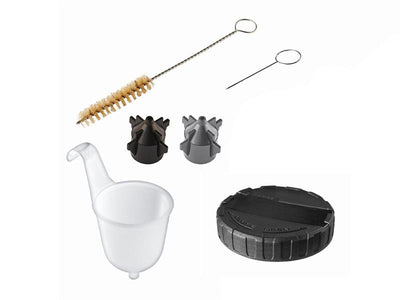
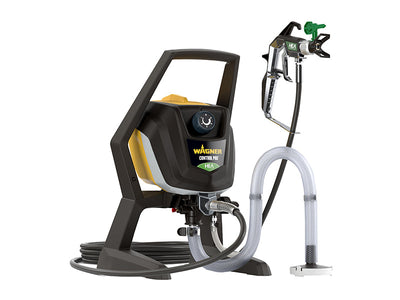


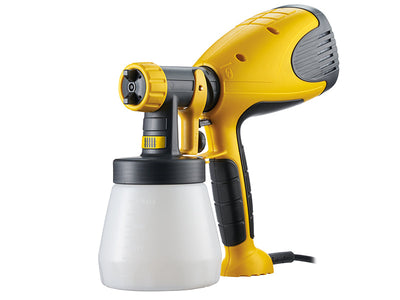
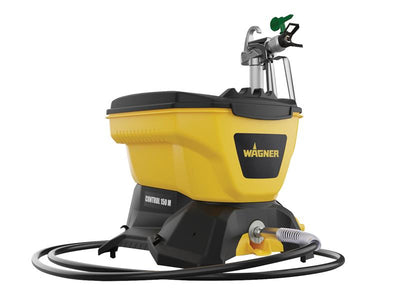
Paint spray guns and sprayers at MTN Shop UK
A paint sprayer transforms how quickly and evenly you can apply a finish. Where a brush or roller is slow and leaves marks, a sprayer atomises the paint into a fine, uniform coat that covers large areas in minutes and reaches into corners, mouldings and textured surfaces that brushes miss. This collection brings together electric and cordless paint spray guns from the leading brands, in every main type - airless, HVLP and universal - so you can match the sprayer to the job, whether that is a whole fence, a room of walls, or a fine finish on a door. This guide explains the types and how to choose.
The three main types of sprayer
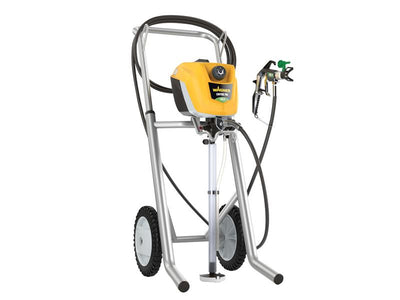
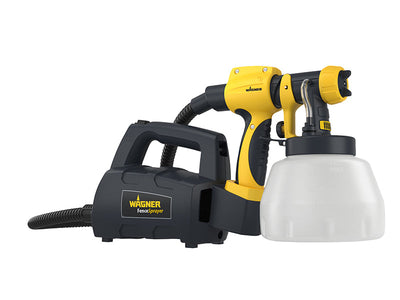
- Airless sprayers: pump paint at very high pressure through a small tip, atomising it without added air. They deliver the fastest, heaviest coat and suit walls, ceilings, fences, decking and large exterior surfaces. The Wagner Control Pro range (150 M, 250R, 350 M) and the Wagner Fence & Decking sprayer are built for this. Airless covers the most ground quickly, at the cost of more overspray and more masking.
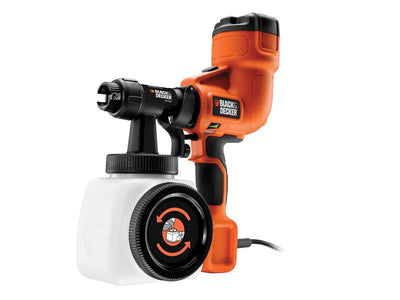
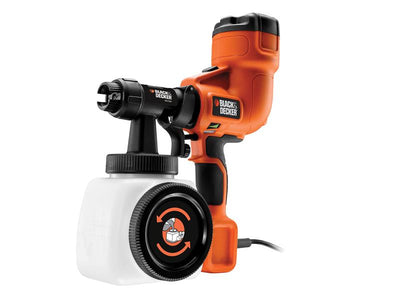
- HVLP sprayers (High Volume Low Pressure): use a large volume of air at low pressure to atomise gently, giving a fine, controlled finish with much less overspray. They are the best choice for doors, cabinets, furniture, trim and detailed work where finish quality matters most. The Batavia HVLP and Black+Decker DHVLP handheld guns are examples.
- Universal sprayers: flexible all-rounders like the Wagner W 100 (wood and metal), W 590 and W 690 FLEXiO that handle a range of paints, stains and treatments for general home and workshop use, bridging speed and finish.
How to choose the right sprayer
- Match the type to the job: airless for speed and coverage on large surfaces, HVLP for the finest finish on detailed pieces, and a universal sprayer if you want one tool for mixed tasks.
- Consider power (wattage): higher wattage generally means the sprayer can handle thicker coatings and sustain output on bigger jobs. Lighter units (around 280 to 400W) suit furniture and smaller tasks; higher-powered units (600W and up) suit walls, fences and full-day work.
- Check the coatings supported: not every sprayer handles every paint - confirm the sprayer is rated for the material you plan to use (emulsion, gloss, wood stain, masonry paint, varnish, lacquer), as thick paints often need thinning or a higher-capacity sprayer.
- Corded or cordless: mains sprayers give unlimited runtime and power for sustained work; cordless models like the Einhell Power X-Change spray guns (TC-SY, TE-SY) and the Batavia MAXXPACK remove the lead for freedom around a job, running on their battery platforms.
Thinning, viscosity and spray pattern
Getting a good spray finish depends on paint viscosity. Many paints, especially emulsions and thicker coatings, need thinning to the manufacturer's recommended ratio so they atomise properly - too thick and the sprayer spits or clogs, too thin and the coat runs. Most sprayers include or specify a viscosity cup to check the paint flows correctly before you start. Adjustable sprayers also let you set the spray pattern (horizontal, vertical or round) and the flow rate to suit the surface: a wide flat pattern for walls and fences, a narrower pattern for narrow trim and detail. Always test on scrap or cardboard first and adjust before spraying the actual work.
Applications
- Walls and ceilings: fast, even emulsion coats indoors with an airless or universal sprayer.
- Fences and decking: rapid exterior coverage with wood treatments, stains and masonry paint - ideal for the Wagner Fence & Decking sprayer and airless units.
- Doors, cabinets and furniture: a fine, brush-mark-free finish in gloss, satin, varnish or lacquer with an HVLP sprayer.
- Metal and woodwork: even coats on railings, gates, garden furniture and joinery.
- Sheds, summerhouses and outbuildings: quick protective coats over large timber areas.
Typical users are professional decorators, joiners and furniture makers, property renovators, and serious DIY users tackling fences, rooms and furniture faster and more neatly than by hand.
Overspray and masking
All sprayers produce some overspray - atomised paint that drifts beyond the target - and airless the most. Good preparation is essential: mask off and sheet up areas you do not want painted, cover floors and adjacent surfaces, and work in still conditions outdoors to stop the mist drifting onto cars, windows and neighbouring surfaces. HVLP produces less overspray and is more forgiving indoors, but masking still pays off. Time spent masking before you spray saves far more time cleaning up afterwards.
Cleaning and maintenance
Cleaning immediately after use is the single most important habit for a sprayer's life. Paint left to dry inside the pump, hose, tip or nozzle clogs and can ruin the tool, so flush it through straight away using the correct cleaner - water for water-based paints, the appropriate solvent for oil-based or specialist coatings - following the paint and sprayer instructions. Run cleaner through until it comes out clear, then clean the tip, nozzle and filters separately. Store the sprayer dry, and for airless units relieve the pressure and follow the storage steps in the manual. A properly cleaned sprayer keeps spraying evenly for years.
Safety
- Respiratory protection: spraying creates a fine mist of atomised paint and solvent that must not be inhaled - wear appropriate respiratory protection and work in a well-ventilated area.
- Airless injection hazard: airless sprayers operate at very high pressure that can inject paint through the skin and cause serious injury - never point the gun at yourself or anyone else, engage the trigger lock when not spraying, and follow the safety instructions.
- Flammable materials: many paints and solvents are flammable - keep away from ignition sources, ventilate, and follow the paint manufacturer's guidance.
- Eye protection: wear suitable eye protection, especially when spraying overhead.
- Skin protection: wear gloves and suitable clothing to keep paint mist off the skin.
Related categories
This Spray Guns collection sits within our wider powered decorating tools range, alongside powered caulking guns and steam wallpaper strippers. For paints, stains, treatments and finishes to spray, see our paint and decorating range, and for brushes, rollers, masking and prep materials see decorating sundries. For sealant application, see caulking and sealant guns, and for cordless sprayer batteries see batteries and chargers for cordless tools. Browse by brand at Wagner, Einhell, Batavia and Black+Decker.
For trade orders, decorating contractor kits, or advice on choosing the right sprayer for your coatings, request a quote and our team will get back to you with availability.