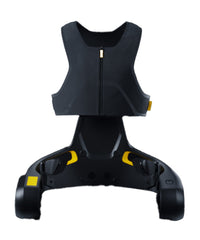
In recent years, exoskeleton technology has surged forward, offering a glimpse into a future where human capabilities are enhanced beyond their natural limitations. Among the myriad of exoskeletons emerging onto the market, a notable contender is the German Bionic Exia Exoskeleton. This cutting-edge device exemplifies the ongoing debate between active and passive exoskeleton designs, each with its own set of advantages and applications.
In this blog post, we'll delve into the differences between active and passive exoskeletons, placing a particular focus on the Exia Exoskeleton, shedding light on its features, functionalities, and potential impact.
Understanding Powered and Passive Exoskeletons
Powered Exoskeletons: Powered exoskeletons are equipped with motors or actuators that actively augment the user's strength and endurance. These devices use sensors to detect the wearer's movements and provide assistive force accordingly. Powered exoskeletons are ideal for tasks requiring heavy lifting or sustained physical exertion, as they can significantly reduce fatigue and strain on the wearer's body.
Passive Exoskeletons: Passive exoskeletons, on the other hand, operate without powered assistance. Instead, they rely on mechanical structures, such as springs or pneumatic systems, to provide support or resistance. Passive exoskeletons may not offer the same level of dynamic assistance as their battery powered counterparts.
The Benefits of a Powered Exoskeleton:
Battery Powered Motors: The force is generated by an external source, this reduces fatigue when equipped with an exoskeleton.
Higher Assistance: Powered exoskeletons offer a higher level of assistance when compared to their passive counterparts, as force is only applied when needed. This aids in reducing fatigue and muscular strain.
Sensor Based: Powered exoskeletons are more sensitive to user movement. This allows for much more flexibility.
Smart & Connected: Powered exoskeletons such as the German Bionic Exia integrate comprehensive data learning & AI application to better support the lifting tasks and flexibility offered by an exo-suit.
Constant Updates: Exoskeletons such as the German Bionic Exia are constantly improving throughout their product lifespan with new features being added remotely such as walk assist.
Dynamic: The German Bionic Exia is tailor made for high-intensity lifting, perfect for many applications. The Exia excels in dynamic environments, making it flexible and versatile.
The Drawbacks to a Passive Exoskeleton:
Lack Of Adaptability: Physical changes are needed to tune assistance. Passive exoskeletons cannot fully address gender, weight and height difference between users.
Low Assistance: The passive mechanism offers little force and it is unable to determine when specific force is needed (i.e. lifting or walking).
Limited Settings: There is a very limited assistive profile for user’s requirements.
Manual Communications: There are no connectivity options and rely on the user's intelligence and capabilities only. These exoskeletons also don't include any ergonomic support insights.
No Added Updates: Due to the manual nature of passive exoskeletons, new features are unable to be added.
Low Intensity: Passive exoskeletons are only designed for low intensity, static operations. Lifting heavier than it is designed for may cause muscle strain, fatigue and injury.
Wearable Ergonomic Tools: The German Bionic 'Exia' Exoskeleton
An Exoskeleton is a wearable, ergonomic device that allows the user to enhance their physical capabilities in terms of their strength, endurance, and mobility. This is beneficial in industries where it is necessary to perform physically demanding tasks such as manufacturing, logistics, construction or even healthcare, mitigating the risk of developing musculoskeletal disorders or Carpal Tunnel Syndrome.
Powered by artificial intelligence and machine learning, the German Bionic Exia Exoskeleton provides support for tasks that involve: