
Mortar Rakes & Wall Chasers
Wall chasers and mortar rakes for cutting clean, parallel chases into masonry, brick, block and concrete - the specialist tools electricians, plumbers, heating engineers and renovation contractors use to sink cables, conduit and pipework below the surface, and to rake out old mortar joints ready for repointing. This is the collection for first-fix electricians, plumbers, kitchen and bathroom fitters, rewire specialists, renovators and general builders who need fast, controlled, dust-managed chasing instead of hacking channels by hand.
The range covers both corded mains machines and cordless platforms so you can match the tool to the site. Features across the range: twin diamond-blade chasing that cuts two parallel grooves in a single pass, adjustable chase width and depth to size the channel to the cable or pipe, integrated dust extraction ports for connection to an M-class vacuum to control silica dust, and corded and cordless options from 110V and 240V mains machines to 36V and 54V battery platforms. Featured tools include the Metabo MFE 40 (1900W, 125mm), the Flex MS-1706 (1400W, 140mm), the cordless DeWalt DCG200 XR FlexVolt (54V, 125mm) and the Einhell TP-MA 36/30 (36V, 2 x 18V).
Brands in this collection include Metabo, DeWalt, Flex and Einhell - specialists in professional masonry cutting and site power tools.

4 products
Mortar Rakes & Wall Chasers – Product list



Wall chasers and mortar rakes at MTN Shop UK
A wall chaser is a specialist masonry cutting tool built for one job: cutting clean, straight, parallel channels - called chases - into walls so that electrical cables, conduit, and pipework can be recessed below the surface and plastered over. Before wall chasers, tradespeople cut chases by hand with a hammer and bolster or freehand with a single-disc angle grinder, both of which are slow, produce ragged channels, and throw huge amounts of uncontrolled dust. A purpose-built wall chaser runs two parallel diamond blades on a single arbor, cutting both edges of the channel in a single pass at a set width and depth, with a guarded body and a dust extraction port designed to capture the debris at source. The Mortar Rakes and Wall Chasers collection at MTN Shop UK brings together corded and cordless wall chasers alongside mortar raking tools for repointing work.
How a wall chaser works
A wall chaser holds two diamond cutting discs side by side on the same spindle, separated by spacer washers. The gap between the discs sets the chase width - add or remove spacers to widen or narrow the channel to suit the cable, conduit or pipe being buried. An adjustable depth guide (a sliding shoe or plunge mechanism) sets the chase depth. In use, the operator plunges the spinning discs into the masonry and runs the tool along the marked line, cutting two clean parallel grooves. The thin web of material left between the two cuts is then knocked out with a hammer and chisel or a dedicated chasing bolster, leaving a neat rectangular channel. Because both edges are cut by diamond blades rather than chipped by hand, the channel is straight, consistent in depth, and far less likely to cause spalling or cracking around the chase.
Corded versus cordless wall chasers
Both formats are represented in this collection, and the right choice depends on the work:
- Corded mains wall chasers (110V and 240V): machines like the Metabo MFE 40 (1900W) and Flex MS-1706 (1400W) deliver sustained high power for continuous chasing in hard, dense masonry and concrete. For rewires, commercial first-fix and heavy renovation where the tool runs for long periods in tough material, mains power gives the best sustained cutting rate and no downtime for charging. 110V versions are the site-transformer standard for UK construction sites; 240V versions suit workshop, domestic and refurbishment use.
- Cordless wall chasers (36V and 54V): the DeWalt DCG200 XR FlexVolt (54V) was the world's first cordless wall chaser, and the Einhell TP-MA 36/30 runs on a 36V (2 x 18V) battery platform. Cordless machines remove the trailing lead and transformer, which matters for occupied properties, awkward access, first-fix in unpowered new builds, and quick jobs where dragging out a transformer is not worth it. For electricians already invested in a DeWalt 54V or Einhell Power X-Change battery system, a cordless chaser shares the same batteries as the rest of the kit.
Who uses wall chasers
- Electricians and rewire specialists: the primary users - sinking cables and conduit into walls during first fix, rewires, consumer unit relocations and new circuits.
- Plumbers and heating engineers: chasing in pipework for concealed runs, radiator feeds, and bathroom and kitchen installations.
- Kitchen and bathroom fitters: recessing services behind units and tiling so nothing sits proud of the wall.
- Renovation and refurbishment contractors: reworking services in older properties where everything is being replaced.
- General builders and maintenance teams: any task that needs a clean channel cut into masonry rather than a rough hacked-out chase.
Mortar rakes and repointing
A mortar rake (also called a mortar raking tool or raking disc) is used to grind out old, soft or failed mortar from between bricks and stone before repointing. Where a wall chaser cuts a fresh channel into solid masonry, a mortar rake follows the existing mortar joint, removing the old pointing to a consistent depth so that fresh mortar can be applied. Mortar raking is done either with a dedicated raking tool or with a raking disc or diamond blade fitted to an angle grinder. Typical users are repointing contractors, heritage and conservation builders, and maintenance teams renewing weathered brickwork. Like wall chasing, mortar raking generates large quantities of fine silica dust and must be carried out with dust extraction or on-tool suppression. This collection is being expanded to include dedicated mortar raking tools - for current raking disc and diamond blade options, contact our team.
Dust extraction is not optional - respirable crystalline silica
This is the single most important thing to understand about wall chasing and mortar raking. Cutting brick, block, concrete, mortar and stone releases respirable crystalline silica (RCS) - microscopic dust particles that penetrate deep into the lungs and cause silicosis, chronic obstructive pulmonary disease (COPD) and lung cancer. The damage is permanent and the dust is often invisible. Under the Control of Substances Hazardous to Health Regulations 2002 (COSHH), the UK workplace exposure limit for RCS is 0.1 mg/m3 averaged over 8 hours, and HSE treats dry cutting of masonry without controls as a serious risk. Every wall chaser in this collection has an integrated extraction port designed to connect to an M-class (or H-class) dust extractor - a standard site vacuum is not sufficient, because it will pass the fine dust straight through and back into the air. The correct setup is: wall chaser plus M-class extractor plus, where residual dust remains, appropriate respiratory protection (FFP3 or a powered respirator). Never dry-chase masonry without extraction connected.
Featured tools in this collection
- Metabo MFE 40 125mm Wall Chaser 1900W: a powerful mains chaser using 125mm diamond discs with adjustable chasing width and depth up to around 40mm, a tilting function for angled plunge cuts, and full dust extraction. Supplied with diamond cutting discs. A strong choice for electricians doing regular first-fix and rewire work in dense masonry.
- Flex MS-1706 140mm Wall Chaser 1400W: a 140mm-disc mains chaser giving greater chase depth and width capacity, with guide rollers for smooth, controlled travel along the wall and dust extraction connection. Suited to deeper pipe chasing and heavier renovation work.
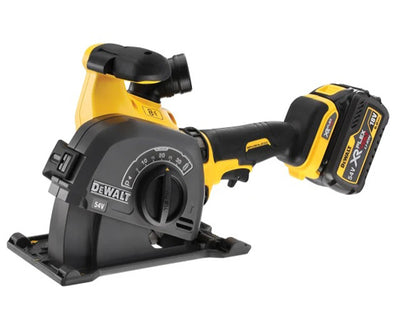
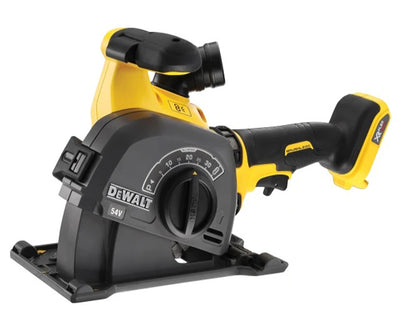
- DeWalt DCG200 XR FlexVolt 125mm Wall Chaser (54V): the world's first cordless wall chaser, available as the DCG200NT bare unit or the DCG200T2 kit with 2 x 6.0Ah FlexVolt batteries. Brushless motor, 125mm discs, adjustable width and depth, and an extraction port - all without a trailing lead. Ideal for electricians on the DeWalt 54V platform working in occupied or unpowered properties.
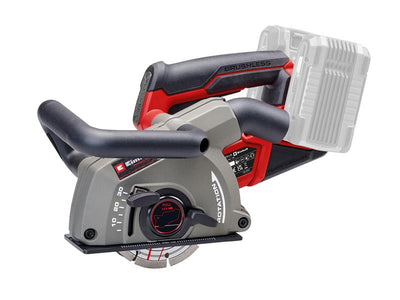
- Einhell TP-MA 36/30 Li BL Wall Chaser (36V, 2 x 18V): a brushless cordless chaser on the Einhell Power X-Change platform, cutting horizontal and vertical grooves with adjustable width and depth. Supplied as a bare (Solo) unit for users already on the 18V/36V PXC battery system. A cost-effective cordless entry point for smaller-scale and domestic work.
Choosing the right wall chaser
- Disc diameter (125mm vs 140mm): larger discs (140mm, as on the Flex MS-1706) give greater maximum chase depth, useful for burying pipework or deeper conduit. 125mm machines are lighter and cover the vast majority of electrical cable chasing.
- Power for the material: for continuous chasing in hard, dense concrete and engineering brick, a high-wattage mains machine (the Metabo MFE 40 at 1900W) sustains the cut better than a cordless unit. For softer block, aircrete and intermittent domestic work, cordless is comfortably capable.
- Corded or cordless: match to how and where you work - mains for all-day production in powered sites, cordless for occupied homes, access-restricted spots, and battery-platform convenience.
- Battery platform: if you already run DeWalt 54V FlexVolt or Einhell Power X-Change tools, staying on-platform means shared batteries and chargers across your kit.
Safety and standards
- Silica dust control (COSHH): always connect an M-class or H-class dust extractor. Wear FFP3 respiratory protection where residual dust remains. Never dry-cut masonry without extraction.
- Eye and face protection: masonry cutting throws high-velocity fragments - wear impact-rated safety eyewear and, for heavy work, a face shield.
- Hearing protection: wall chasers are loud and used in confined, echoing rooms - wear hearing protection.
- Kickback and blade care: diamond discs must be rated for the tool's speed and correctly fitted; keep a firm two-handed grip and let the tool reach full speed before plunging. Check for buried cables and pipes with a detector before cutting.
- Electrical safety: scan the wall for live cables and water pipes before chasing. On site, use 110V machines through a transformer with RCD protection; isolate circuits where cutting near existing wiring.
- PUWER 1998 (Provision and Use of Work Equipment Regulations) applies to work use, covering guarding, maintenance and operator competence. Wear appropriate gloves and safety boots.
Related categories
The Mortar Rakes and Wall Chasers collection sits within our wider power tools category, alongside our wall chasers, metalworking and angle grinders range. Because dust control is essential, see our respiratory protection and dust masks range for FFP3 masks and respirators. For cordless machines, see our batteries range for DeWalt FlexVolt and Einhell Power X-Change packs. For essential PPE, see our safety eyewear, safety gloves and safety boots ranges. For engine and tool maintenance consumables, see lubricants, oils and maintenance.
For trade orders, electrical contractor kits, cordless platform bundles or specific wall chaser and mortar rake references, request a quote and our team will get back to you with availability.