Fall protection can seem simple in theory, but choosing the right equipment is often more complex in practice. Different work environments, anchor points, harness types, connectors, standards and compatibility requirements can all affect which fall protection system is suitable for the task.
One of the easiest ways to understand the basics is through the ABC’s of fall protection: Anchors, Bodywear and Connectors. These three elements work together to form the foundation of a personal fall protection system.
This guide explains what each part does, how the components connect, and what to consider when selecting equipment for working at height.
What Are the ABC’s of Fall Protection?
The ABC’s of fall protection refer to the three main components used in a personal fall arrest system:
| Component | What It Means | Role in the System |
|---|---|---|
| A – Anchor | The secure structure or anchorage point | Provides the fixed connection point |
| B – Bodywear | The full body safety harness | Supports the user during fall arrest |
| C – Connector | Lanyard, SRL, rope grab, hook or carabiner | Links the harness to the anchor point |
Each part has an important role. A harness cannot protect the user without a suitable connector, and a connector cannot function safely without an appropriate anchor point. The full system must be selected, inspected and used correctly.
For height safety equipment, compatibility is just as important as individual product strength. Always follow the manufacturer’s instructions, site procedures and relevant safety requirements when building or using a fall protection system.
A – Anchors and Anchorage Connectors
The anchor is the secure structure that supports the fall protection system. This could be part of a building, roof structure, steel beam, fixed anchor point or other approved structure.
An anchorage connector is the device used to connect the fall protection equipment to that anchor. In simple terms, the anchor is the structure, while the anchorage connector is the component attached to it.

The anchor and anchorage connector should always be suitable for the application, compatible with the rest of the system, and used according to manufacturer’s guidance.
Horizontal Lifelines
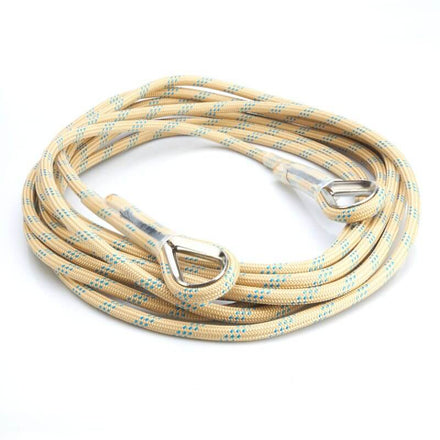
A horizontal lifeline is an anchorage system made from rope, webbing or cable connected between two suitable anchor points. It creates an extended connection line that workers can attach to while moving across a work area.
Horizontal lifelines can be useful where mobility is needed across roofs, platforms or other elevated areas. They should always be installed, used and inspected in line with the manufacturer’s instructions and the site’s fall protection plan.

B – Bodywear: Full Body Harnesses
Bodywear refers to the equipment worn by the user. For fall arrest applications, this is usually a full body safety harness.
A full-body harness is designed to support the user and help distribute forces across the body in the event of a fall. Harnesses can vary depending on the work type, attachment points, adjustability, comfort features and intended use.
The primary parts of a full-body harness include webbing, buckles, adjustment points and D-rings.

Webbing
Webbing forms the main structure of the harness, including the shoulder, leg and body straps. Some harnesses use specialist webbing, such as water-repellent, UV-resistant or flame-retardant materials, depending on the working environment.
Buckles and Adjusters
Buckles and adjusters help secure the harness to the user and allow it to be fitted correctly. Common buckle types include tongue buckles, pass-through buckles, quick-connect buckles and roller buckles.
D-rings and Attachment Points
D-rings are the points where connectors attach to the harness. Depending on the harness design, attachment points may be located at the back, chest, sides or shoulders.
The rear dorsal D-ring is commonly used as the main fall arrest attachment point, while other attachment points may be used for work positioning, restraint, rescue or specific applications.
As the harness is a critical part of the fall protection system, it should be checked before use and inspected regularly. For more detail, read our safety harness inspection guide.
C – Connectors
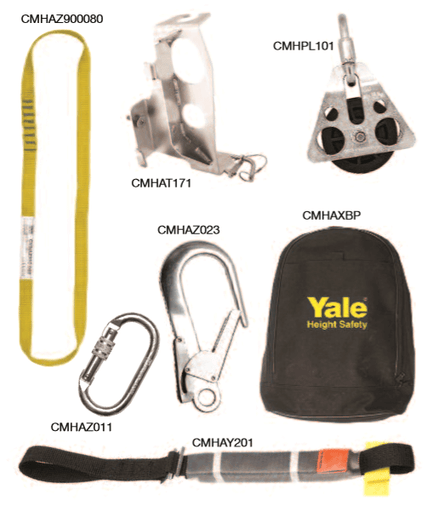
Connectors link the user’s harness to the anchor point or anchorage system. Depending on the task, this may include a shock-absorbing lanyard, self-retracting lifeline, rope grab, carabiner, snap hook or rebar hook.
Connectors help support movement, limit fall distance and allow the fall protection system to function correctly. They must be compatible with the harness, anchor point and intended application.
Snap Hooks, Rebar Hooks and Carabiners
Snap hooks, rebar hooks and carabiners are common connector types used in fall protection systems.
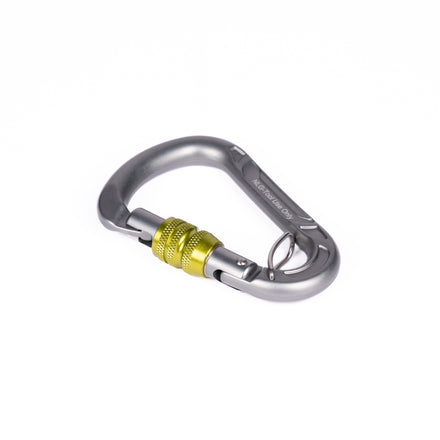
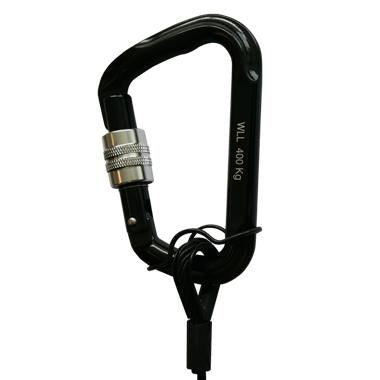
Snap hooks are often used on lanyards and lifelines. Rebar hooks have a larger gate opening and may be used where connection to larger structural elements is required. Carabiners are used across many height safety and rope access applications.
Before use, connector gates, locks and bodies should be checked for smooth operation, secure locking, corrosion, deformation or visible damage.
Lanyards
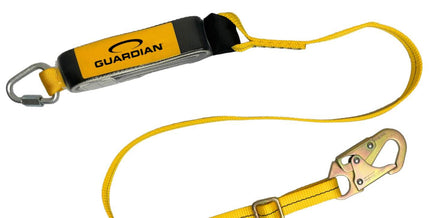
Lanyards connect the harness to an anchor point or anchorage system. They are commonly used in fall arrest, restraint and work positioning applications.
There are two broad types: shock-absorbing lanyards and non-shock-absorbing lanyards. Shock-absorbing lanyards are designed to help reduce the force transferred to the user during a fall arrest event. Non-shock-absorbing lanyards are typically used for restraint or positioning, where the user is prevented from reaching a fall hazard.
Not every lanyard is suitable for fall arrest, so always check the product type, markings and manufacturer instructions before use.
Self-Retracting Lifelines
Self-retracting lifelines, often called SRLs or fall arrest blocks, allow the lifeline to extend and retract as the user moves. If a fall occurs, the unit locks to help arrest the fall.
SRLs can be useful where workers need more freedom of movement while keeping the connection line under control. Some SRLs are designed for specific applications, such as leading edge work, while others are not suitable for that type of exposure.
Vertical Lifelines and Rope Grabs
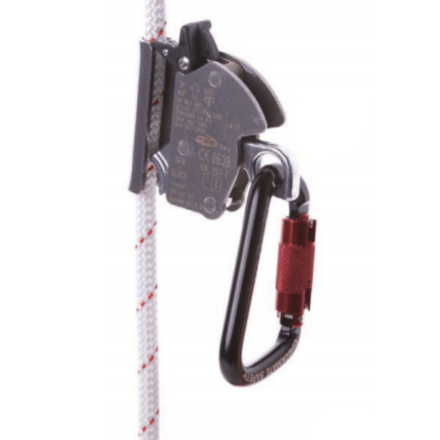
A vertical lifeline is usually a rope or cable system connected to an anchor point. The user moves along the line with a rope grab or guided fall arrester.
This type of system is commonly used for vertical access, ladder work and certain maintenance tasks. The rope grab moves with the user during normal work and locks onto the line if a fall occurs.
As with all fall protection equipment, the full system should be compatible, suitable for the task and used according to manufacturer’s guidance.
How the ABC’s Work Together
The ABC’s of fall protection are not separate pieces of equipment used in isolation. They work together as a complete system.
A worker wears the full body harness, which connects to a lanyard, SRL or other connector. That connector then attaches to a suitable anchor or anchorage system. If one part of the system is unsuitable, damaged, incompatible or used incorrectly, the overall protection may be compromised.
This is why fall protection planning should consider the full setup, not just one item. The anchor point, harness, connector, fall clearance, working position, rescue plan and equipment compatibility all matter.
Choosing Fall Protection Equipment
When choosing fall protection equipment, start with the task and environment. Different jobs may require different systems.
For example, work on a flat roof may require a different setup from vertical ladder access, steel erection, MEWP work, rope access or work positioning. Outdoor conditions, sharp edges, chemicals, heat, rescue requirements and user movement can also affect equipment choice.
Before selecting equipment, consider:
• The type of work being carried out
• The available anchor points
• Whether the system is for fall arrest, restraint or work positioning
• Required movement and working radius
• Fall clearance
• Compatibility between components
• Manufacturer instructions
• Inspection and maintenance requirements
• Relevant CE, EN or site safety requirements
For more background on standards for harnesses, lanyards, connectors and anchor devices, read our guide to CE & EN certified height safety equipment.