Choosing the right safety helmet depends on the hazards involved, the working environment and the type of protection required. Different UK safety helmet standards cover different applications, from construction and industrial work to rope access, electrical work, firefighting and technical rescue.
Two of the most commonly encountered standards are EN 397 for industrial protective helmets and EN 12492 for mountaineering-style helmets used in climbing and similar activities. However, they are not the only standards to consider. This guide explains EN 397, EN 12492 and other important head-protection standards to help you understand where each one fits.
What Are the Main Safety Helmet Standards in the UK?
There are several safety helmet and head-protection standards used for different hazards and applications. The appropriate standard should be considered alongside the workplace risk assessment, the task being carried out and the manufacturer's intended use. HSE advises employers to select head protection according to the hazards involved and notes that head protection can include safety helmets and bump caps.
| Standard | Main Application |
|---|---|
| BS EN 397:2025 | Industrial protective helmets used in environments such as construction, manufacturing and general industry |
| BS EN 14052 | High-performance industrial helmets offering additional protection, including against off-crown impacts |
| BS EN 12492:2025 | Mountaineering-style helmets used for climbing and activities with similar hazards, including rope access and arboriculture |
| BS EN 50365:2023 | Electrically insulating helmets for work on or near low- and medium-voltage electrical installations |
| BS EN 812:2012 | Industrial bump caps designed to protect against striking the head on hard, stationary objects |
| BS EN 443:2008 | Protective helmets designed for firefighting in buildings and other structures |
| BS EN 16473:2014 | Helmets designed for technical rescue operations and specialist emergency response applications |
What Is EN 397?

BS EN 397:2025 is the current British Standard for industrial protective helmets. It sets requirements for the design, performance, testing and marking of helmets intended for general industrial use.
Helmets tested to EN 397 are designed to provide protection against common workplace hazards, including impact from falling objects and penetration risks. Depending on the helmet design, additional optional tests may also cover features such as lateral deformation, low temperatures and electrical properties.
When choosing an EN 397 helmet, it is important to consider the environment it will be used in and whether additional features are required for the job. For example, helmets used on construction sites may prioritise impact protection, while other industries may require extra ventilation, accessories or compatibility with additional PPE.
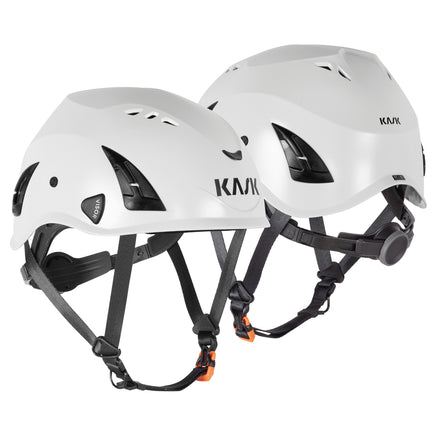
The KASK Superplasma AQ Safety Helmet available from MTN SHOP UK conforms to EN 397 and is designed for professional industrial and site applications. It also offers compatibility with KASK eye and hearing protection accessories.
What Is EN 12492?

BS EN 12492:2025 is a helmet standard commonly associated with work at height, rope access and other activities where helmet retention and secure positioning are important.
Unlike traditional industrial helmets, EN 12492 helmets are tested with stronger retention requirements, including chin strap performance, helping reduce the risk of the helmet coming off during movement or a fall. This makes them suitable for applications such as rope access, arboriculture, rescue and specialist height safety work.
When selecting an EN 12492 helmet, users should consider the type of work being carried out, the level of movement involved and whether the helmet is compatible with other required equipment such as eye protection, hearing protection or headlamps.
The KASK SuperPlasma PL Helmet conforms to EN 12492 and is designed for applications where secure helmet retention is important. It is compatible with KASK visors, earmuffs and lighting accessories for different work-at-height setups.
EN 397 vs EN 12492: Which Helmet Standard Do You Need?
EN 397 and EN 12492 are designed for different types of head protection, although the distinction is less straightforward following the introduction of Type 1 and Type 2 helmets under EN 397:2025. The table below highlights the main differences between the two standards.
| Category | EN 397 | EN 12492 |
|---|---|---|
| Main Application | Industrial protective helmets used across construction, manufacturing, maintenance and general industry | Mountaineering helmets and activities with similar hazards, including climbing, rope access and arboriculture |
| Impact Protection |
Type 1: on-crown impact protection. Type 2: on- and off-crown impact protection |
Impact protection is tested at the crown, front, rear and sides of the helmet |
| Penetration Protection | Crown penetration protection is required, with additional off-crown penetration protection available under Type 2 requirements | Includes testing for resistance to penetration through the helmet shell |
| Chin Strap / Retention |
Type 1: Chin strap optional. Type 2: Chin strap required as part of the helmet’s stronger retention system. |
A chin strap is required, with the retention system tested to help keep the helmet securely positioned during use and movement |
| Typical Applications | Construction sites, manufacturing, maintenance, engineering and other industrial environments | Climbing, rope access, arboriculture and other applications where secure helmet retention is important |
| Key Difference | An industrial helmet standard that now includes two performance levels depending on the level and direction of protection required | A mountaineering helmet standard focused on all-round impact protection and secure helmet retention during movement |