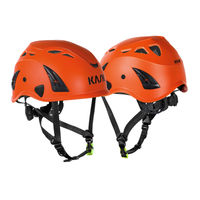
The Petzl Vertex Vent and KASK Superplasma PL are two popular safety helmets used in professional work environments, including work at height, rope access, industrial work and construction. Both are designed to provide head protection while offering ventilation, comfort and compatibility with accessories such as visors, earmuffs and headlamps.
Although they may look similar at first, the right choice depends on how and where the helmet will be used. Key differences include helmet standards, chinstrap setup, weight, ventilation, accessory features and suitability for ground-level work or work-at-height applications.
In this guide, we compare the Petzl Vertex Vent and KASK Superplasma PL helmets, explain their main similarities and differences, and help you choose the right safety helmet for your work.
Quick Comparison: Petzl Vertex Vent vs KASK Superplasma PL
The Petzl Vertex Vent and KASK Superplasma PL are both popular helmets for professional work environments where comfort, ventilation and secure fit matter. However, they are designed with slightly different use cases in mind.
The Petzl Vertex Vent is often chosen for mixed working environments because its DUAL chinstrap system can be adjusted for work at height under EN 12492 or ground-level work under EN 397. The KASK Superplasma PL is certified to EN 12492 and is focused on lightweight comfort, ventilation and secure fit for work-at-height applications.
The table below gives a quick overview of the main differences to consider before choosing between the two helmets.
| Feature | Petzl Vertex Vent | KASK Superplasma PL |
|---|---|---|
| Helmet Type | Vented safety helmet for industrial and work-at-height use | Lightweight helmet for work-at-height use |
| Standards | EN 397, EN 12492 | EN 12492 |
| Best For | Mixed ground work, industrial use and work at height | Rope access, tower climbing, work at height and users wanting a lightweight helmet |
| Chinstrap | DUAL chinstrap system for adapting between different work situations | Secure chinstrap designed to help keep the helmet stable during active work |
| Ventilation | Vented design for airflow during active work | 10 ventilation channels for breathability and comfort |
| Accessory Compatibility | Compatible with accessories such as visors, earmuffs and headlamps | Visor attachment points, earmuff adapter points and integrated lamp clips |
| Main Advantage | Flexible option for users moving between ground work and work at height | Lightweight helmet with strong ventilation and accessory compatibility |
Key Similarities
Both the Petzl Vertex Vent and KASK Superplasma PL are designed for professional head protection in demanding work environments.
They both offer ventilation, adjustable fit systems, secure chinstrap setups and compatibility with accessories such as visors, earmuffs and headlamps.
Both helmets can support work-at-height, construction, maintenance and rope access tasks, but the best choice depends on the required standard and the type of work being carried out.
Main Differences
The main difference between the Petzl Vertex Vent and KASK Superplasma PL is how each helmet is positioned for different working environments.
The Petzl Vertex Vent is designed for mixed use and is certified to both EN 397 and EN 12492, making it suitable for users who move between ground-level industrial work and work at height. Its DUAL chinstrap system supports that flexibility.
The KASK Superplasma PL is certified to EN 12492 and is more focused on work-at-height use, where secure fit, ventilation and lightweight comfort are especially important.
In simple terms:
- Choose Petzl Vertex Vent for mixed ground-level and work-at-height use.
- Choose KASK Superplasma PL for lightweight comfort during rope access, tower climbing and work at height.