This guide explains the main types of PPE, where they are commonly used and how to choose suitable equipment for different working environments. For more detail on helmet requirements, see our Safety Helmet Standards UK guide.
What Is Personal Protective Equipment (PPE)?
Personal protective equipment, commonly known as PPE, is equipment or clothing worn or held to help protect workers from health and safety risks at work. This can include items such as safety helmets, gloves, eye protection, hearing protection, safety footwear and respiratory equipment.
PPE should be selected according to the hazards involved and used alongside other safety controls rather than as a replacement for them. The type of protection required will therefore vary between construction, maintenance, industrial work, working at height and other environments.
Safety helmets are used where there is a risk of falling objects, impact or other head hazards.
They are common across construction, industrial work and all work-at-height applications. A good example is the KASK Superplasma AQ Safety Helmet, which conforms to EN 397 and is designed for professional site use.
Ear defenders help reduce exposure to harmful workplace noise from machinery, power tools and other loud equipment.
The KASK Helmet Earmuffs are available in three protection levels, making them suitable for different noise environments from general industrial work through to higher-noise applications. They are certified to EN 352-3 and are designed for use with KASK safety helmets.
For more information on the different protection levels and choosing the right option for your working environment, read our guide to KASK ear protection and earmuffs.
Work Gloves
Work gloves help protect the hands from cuts, abrasion, friction and handling hazards, but the type of glove should match the task.
For construction and industrial work, cut-resistant gloves can provide useful protection when handling tools, materials and sharp-edged components. The DeWALT Power Tools Cut D Touchscreen Gloves - L (Size 9) combine cut protection with good dexterity and touchscreen compatibility, making them a practical option for everyday site and workshop tasks.
Safety footwear helps protect the feet against hazards such as impact, penetration, slips and wet working conditions.
For construction and general site work, a proper safety boot can provide a better balance of protection, support and everyday wearability than a Wellington-style boot. The Stanley Flagstaff S3 Waterproof Safety Boots are a practical option for demanding work environments where durable, protective footwear is required.
Hi-vis workwear helps make workers easier to see around vehicles, machinery and other busy working environments.
The Scan Hi-Vis Utility Waistcoat Orange is a lightweight option for site and outdoor work, with an open-sided design that can be worn over other workwear.
Respiratory protective equipment helps reduce exposure to airborne hazards such as dust, fumes and particles.
The correct respirator depends on the contaminant and protection level required, with options ranging from disposable masks to reusable half and full-face respirators. One example is the DEWALT FFP2 Disposable Respirator, designed for certain particulate hazards.
Safety harnesses form part of a wider fall-protection system when work at height presents a fall risk that cannot be removed by other controls.
Different harnesses are designed for fall arrest, restraint and work positioning applications. The Guardian 2-Point Safety Harness includes front and rear attachment points and is designed for construction, roofing and general industry use.
Safety glasses and goggles help protect the eyes from dust, flying particles, debris and other hazards created during cutting, drilling, grinding or workshop work.
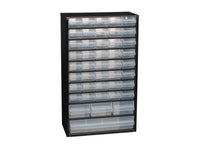
Workshop tool storage is best suited to tools, fixings and components that need a permanent, organised home rather than being carried from place to place. Drawer cabinets and fixed storage systems make it easier to separate smaller items, keep frequently used parts visible and reduce clutter around the work area.
The Raaco C11-44 Metal Cabinet 44 Drawer is a strong option for this type of setup, with 44 drawers that can be subdivided for smaller parts and accessories. The painted steel cabinet can stand independently or be mounted on a wall, making it a practical choice for workshops, maintenance areas and other fixed workspaces.
The PPE you need will depend on the hazards involved in the job rather than the job title alone. Different working environments may require different combinations of head, eye, hand, hearing, respiratory or fall protection.
Job / Working Environment
PPE Commonly Considered
Construction & Building Work
Safety helmets, safety boots, work gloves, hi-vis clothing and task-specific eye, hearing or respiratory protection
Cutting, Drilling & Grinding
Safety glasses or goggles, hearing protection, work gloves and suitable respiratory protection where dust is generated
Workshop & Maintenance Work
Eye protection, work gloves, safety footwear and hearing protection depending on the machinery or tools being used
Work at Height
Suitable head protection, safety harnesses, lanyards and other fall-protection equipment
Roadside & Outdoor Work
Hi-vis workwear, suitable safety footwear and additional weather or task-specific PPE where required
For dusty construction work, HSE notes that respiratory protective equipment may still be required where extraction or other controls do not reduce exposure enough, and tight-fitting masks may require face-fit testing.
When selecting PPE for any task, make sure the equipment is suitable for the specific hazard, fits correctly and can be worn safely alongside other protective equipment being used.
The right personal protective equipment (PPE) should match the hazards involved, the working environment and the task being carried out. From safety helmets and work gloves to hearing protection, safety footwear and fall protection, the best setup will vary from one job to another.
Choosing suitable PPE can help improve protection, comfort and day-to-day usability, especially when different items need to be worn together. Browse our PPE and height safety range to find equipment for construction, industrial work, maintenance and work at height.
Frequently Asked Questions
The personal protective equipment (PPE) you need depends on the hazards involved in the task rather than your job title alone. Common types of PPE include safety helmets, safety glasses, work gloves, safety footwear, hearing protection, hi-vis workwear and respiratory protection. A risk assessment should determine which combination is required for the work being carried out.
In the UK, if a risk assessment shows that PPE is required, employers must provide suitable PPE free of charge to workers covered by the regulations. This includes ensuring it is suitable, maintained and that workers receive appropriate instructions and training. Questions about paying for safety boots, helmets and other PPE appear frequently in UK construction discussions online.
PPE for construction can include safety helmets, safety boots, hi-vis clothing, gloves and eye protection, with hearing or respiratory protection added where the task creates noise, dust or other hazards. The exact combination depends on the site and activity being carried out. For more information on head protection, see our Safety Helmet Standards UK guide.
There is no single replacement period that applies to every type of PPE. Equipment should be checked regularly and replaced if it is damaged, worn, contaminated or no longer provides the required protection, while manufacturer replacement guidance should also be followed. Specialist equipment such as harnesses may require more formal inspection and maintenance.
Yes, but different items of PPE must remain effective when worn at the same time. For example, safety glasses should not interfere with the seal of a respirator, and ear defenders must be compatible with the safety helmet being used. Comfort and compatibility are common real-world concerns when workers need to wear several items at once.